
Doctor of Nurse Practice – Filling the Void
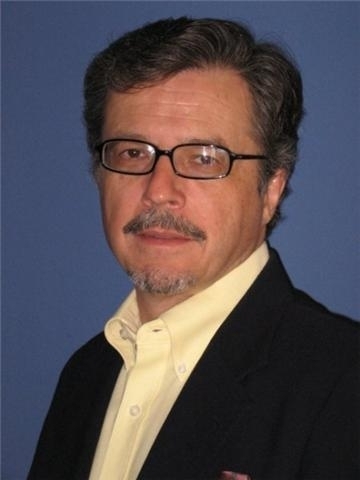
Dr. David Edward Marcinko; MBA, CMP™
[Publisher-in-Chief]
As the shortage of family doctors and primary-care physicians mount, and the domestic uninsured problem exacerbates to > 40 million uninsured Americans, the nursing profession is stepping up-to-the-plate by offering one possible solution to healthcare reform.
Cause and Effect
And, it is not happing because of managed care cost constraints, medical benefit rationing or reductions, or any other draconian or political machination. Rather, it’s happening because nurses are taking medicine back to its root-core constituency – patients.
In fact, according to leading industry expert and adjunct professor of healthcare administration Hope Rachel Hetico RN, MHA, CPHQ, CMP™ of Atlanta, it’s more like a cause-effect relationship. “Patients with a problem – are seeking solutions; and it doesn’t get more basic than that”, says Hetico.
Not a New Concept
The “doctor-nurse” concept is not revolutionary by any means, opines Hetico. But, it is the “new formalized execution and marketplace acceptance that is very exiting.” And, “the nurse-as-doctor concept is a natural evolution of the nurse practitioner-model which, after a slow start, is finally taking off to the benefit of patients and physicians, alike.”
The “growing success of retail and on-site medical clinics, increased pricing transparency, and related consumer directed health care plan initiatives was the real impetus; and now there is no looking back.”
The Future of DNPs?
For example, by the year 2015, the Doctor of Nurse Practice (DNP) program will be recognized by the accrediting body of the American Association of Colleges of Nursing (AACN), which oversees schools that offer advanced degrees to nurse-practitioners such as, nurse anesthetists (CRNAs), clinical nurse specialists and nurse midwives, etc.
And, according to Christopher Guadagnino PhD, of the Physicians News Digest, the National Board of Medical Examiners (NBME) will begin offering part of the United States Medical Licensing Examination (USMLE) – the physicians’ medical board examination – as certification proof of DNPs’ advanced training.
Passing that exam is “intended to provide further evidence to the public that DNP certification holders are qualified to provide comprehensive patient care,” according to the Council for the Advancement of Comprehensive Care (CACC); a consortium of academic and health policy leaders promoting the clinical doctoral degree for primary care nurses.
The Nay-Sayers
Of course, nurse practitioners (NPs) poised for expanded clinical practice opportunities inevitably raise concerns about medical quality and safety of care. And, some physician groups warn that blurring the line between doctors and nurses will only confuse patients and jeopardize care.
Still, that hasn’t seemed to have happened with other limited licensed medical specialists, like podiatrists [Doctors of Podiatric Medicine] who may prescribe medications, admit patients to the hospital, cover the emergency room and perform sophisticated bone, tendon and soft tissue reconstructive surgical procedures; after four years of college, post-baccalaureate matriculation in a 4 year podiatric medical school, with an additional 1-4 years of internship, residency and/or fellowship training.
The “entrenched traditional system is self-centered, bureaucratic and very patronizing in some cases. It just doesn’t want to share power or give patients much credit for their own care in the contemporary and collaborative healthcare zeitgeist”, says Hetico.
Nurses with doctorates may also use the imprimatur DrNP after their name, and the titular designation of “Doctor”, as well. Physician groups want DNPs to be required to clearly state to patients, and prospective students, that they are not Medical Doctors [MDs] -or- Doctors of Osteopathic Medicine [DOs] who seemed to have negotiated the nomenclature divide.
Changing the “Codes”
Reality may have outpaced the debate over these issues however, given the intensifying shortage of first-line primary care providers, family practitioners and internists. Moreover, the possible causes for the shortage are both obvious, and subtle.
As noted by industry analyst Brian Klepper, at Health Care Renewal, and Dr. Roy Poses, a Clinical Associate Professor at Brown University’s School of Medicine opine, economics may play a major role in the debate on the dearth of primary care physicians. Moreover, perhaps an overall re-assessment of the CPT® coding systems and the primary medical compensation system is even in order, and more than partially blamed as causative.
For example, there is often a financial conflict in the advisory relationship that the Center for Medical and Medicaid Services (CMS) uses with the American Medical Association’s (AMA’s) Relative Value Scale Update Committee (RUC). Essentially, according to Klepper and Poses, the RUC is overwhelmingly dominated by specialists, who have consistently urged CMS to increase specialty reimbursement at the expense of primary care.
Link: http://www.thehealthcareblog.com/the_health_care_blog/2008/05/more-on-physici.html
Questionable Specialists
Yet, if perception is reality, whether patients actually benefit from some highly-paid surgical specialists, and their elective interventions and surgeries, is certainly debatable.
As an example, the recent May 2008 lay article published in PARADE magazine by Dr. Ranit Mishori, suggested that more than a few surgeries like knee arthroscopy, certain back and sinus procedures are not only often un-necessary, but economically motivated. This is not an epiphany to those in the industry, or outside its realm, anymore.
Why?
Therefore, is it any wonder why over the last five years the percent of medical school graduates entering family practice has dropped from 14 percent to 8 percent? Or, why only 25 percent of internal medicine residents now go into office-based practice; with the rest becoming hospitalists or sub-specialists.
Moreover, is another private insurance/Medicare paid knee scope really esteem-enhancing or self-actualizing for the operating surgeon? Or, is it demoralizing to perform same for mere “lucre.”
Now, ask the same question to a DNP treating a private pay diabetic patient, or an uninsured pediatric patient, or an elderly senior citizen.
Where is the “justice”, some may cry?
Thus, one can hardly blame the DNPs if Paretto’s 80/20 law of reason is pursed as at least partial help in the current healthcare insurance crisis conundrum. Perhaps, it really is better to treat 80% of the many patients appropriately with doctor-nurses; than 20% of the vital few patients inappropriately with super-specialty care?
Philosophical Considerations
Now however, based on the above thoughts, we are entering into the realm of philosophy, moral introspection, theology, ontology debate and – even religion – as these ruminations include many diverse points-of-view, like the following among others:
-
Utilitarians, who argue for medical resource distribution based on achieving the “greatest good for the greatest number of patients.”
-
Libertarians, who believe that recipients of medical resources should be those patients who have made the greatest contributions to the production of those resources – a free market approach to distribution.
-
Egalitarians, which support the distribution of medical resources based on the greatest patient need, irrespective of contribution or other considerations.
Consequently, developing a system of access based on such “justice” is fraught with enormous difficulty.
Industry Innovation and Redemption
Disruptive innovations are often considered simplistic, and compared to toys when they first emerge (remember the first Apple computer?). But, there may be no stopping DNPs from making their healthcare services more collaborative, useful, convenient, electronic and affordable to the patient.
Redemption, and dare I say it; salvation of the healthcare industrial complex depends on such innovation and change. And, the industry can be saved by those of this ilk, but change requires courage. Proponents of the DNP program exhibit the requisite courage, but do the rest of the industry? The lives of our patients, and more than 40 million currently under/uninsured Americans, may just depend on it.
Assessment
Today, patients, payers, employers and all web-enable and modern 2.0 healthcare workforce stakeholders demand collaboration between doctors, NPs, other medical professionals, and all physician specialists. In fact, it is becoming the rule, rather than the exception, in an increasingly transparent and accountable society.
So, what do you think about this increased market-competition in healthcare generally, and with DNPs in particular; please comment and opine?
Conclusion
Your thoughts and comments on this ME-P are appreciated. Feel free to review our top-left column, and top-right sidebar materials, links, URLs and related websites, too. Then, subscribe to the ME-P. It is fast, free and secure.
Speaker: If you need a moderator or speaker for an upcoming event, Dr. David E. Marcinko; MBA – Publisher-in-Chief of the Medical Executive-Post – is available for seminar or speaking engagements. Contact: MarcinkoAdvisors@msn.com
OUR OTHER PRINT BOOKS AND RELATED INFORMATION SOURCES:


Filed under: Career Development, Managed Care, Op-Editorials, Quality Initiatives, Research & Development | 19 Comments »







 Support our online development, and advance our onground research initiatives in free market economics, as we seek to showcase the brightest Next-Gen minds.
THE ME-P DISCLAIMER: Posts, comments and opinions do not necessarily represent iMBA, Inc., but become our property after submission. Copyright © 2006 to-date. iMBA, Inc allows colleges, universities, medical and financial professionals and related clinics, hospitals and non-profit healthcare organizations to distribute our proprietary essays, photos, videos, audios and other documents; etc. However, please review copyright and usage information for each individual asset before submission to us, and/or placement on your publication or web site. Attestation references, citations and/or back-links are required. All other assets are property of the individual copyright holder.
Support our online development, and advance our onground research initiatives in free market economics, as we seek to showcase the brightest Next-Gen minds.
THE ME-P DISCLAIMER: Posts, comments and opinions do not necessarily represent iMBA, Inc., but become our property after submission. Copyright © 2006 to-date. iMBA, Inc allows colleges, universities, medical and financial professionals and related clinics, hospitals and non-profit healthcare organizations to distribute our proprietary essays, photos, videos, audios and other documents; etc. However, please review copyright and usage information for each individual asset before submission to us, and/or placement on your publication or web site. Attestation references, citations and/or back-links are required. All other assets are property of the individual copyright holder.




 The Leading Business Education Network for Doctors, Financial Advisors and Health Industry Consultants