







 Support our online development, and advance our onground research initiatives in free market economics, as we seek to showcase the brightest Next-Gen minds.
THE ME-P DISCLAIMER: Posts, comments and opinions do not necessarily represent iMBA, Inc., but become our property after submission. Copyright © 2006 to-date. iMBA, Inc allows colleges, universities, medical and financial professionals and related clinics, hospitals and non-profit healthcare organizations to distribute our proprietary essays, photos, videos, audios and other documents; etc. However, please review copyright and usage information for each individual asset before submission to us, and/or placement on your publication or web site. Attestation references, citations and/or back-links are required. All other assets are property of the individual copyright holder.
Support our online development, and advance our onground research initiatives in free market economics, as we seek to showcase the brightest Next-Gen minds.
THE ME-P DISCLAIMER: Posts, comments and opinions do not necessarily represent iMBA, Inc., but become our property after submission. Copyright © 2006 to-date. iMBA, Inc allows colleges, universities, medical and financial professionals and related clinics, hospitals and non-profit healthcare organizations to distribute our proprietary essays, photos, videos, audios and other documents; etc. However, please review copyright and usage information for each individual asset before submission to us, and/or placement on your publication or web site. Attestation references, citations and/or back-links are required. All other assets are property of the individual copyright holder.


Army Bronze Star Medal Interview
[By ME-P Staff Writers]
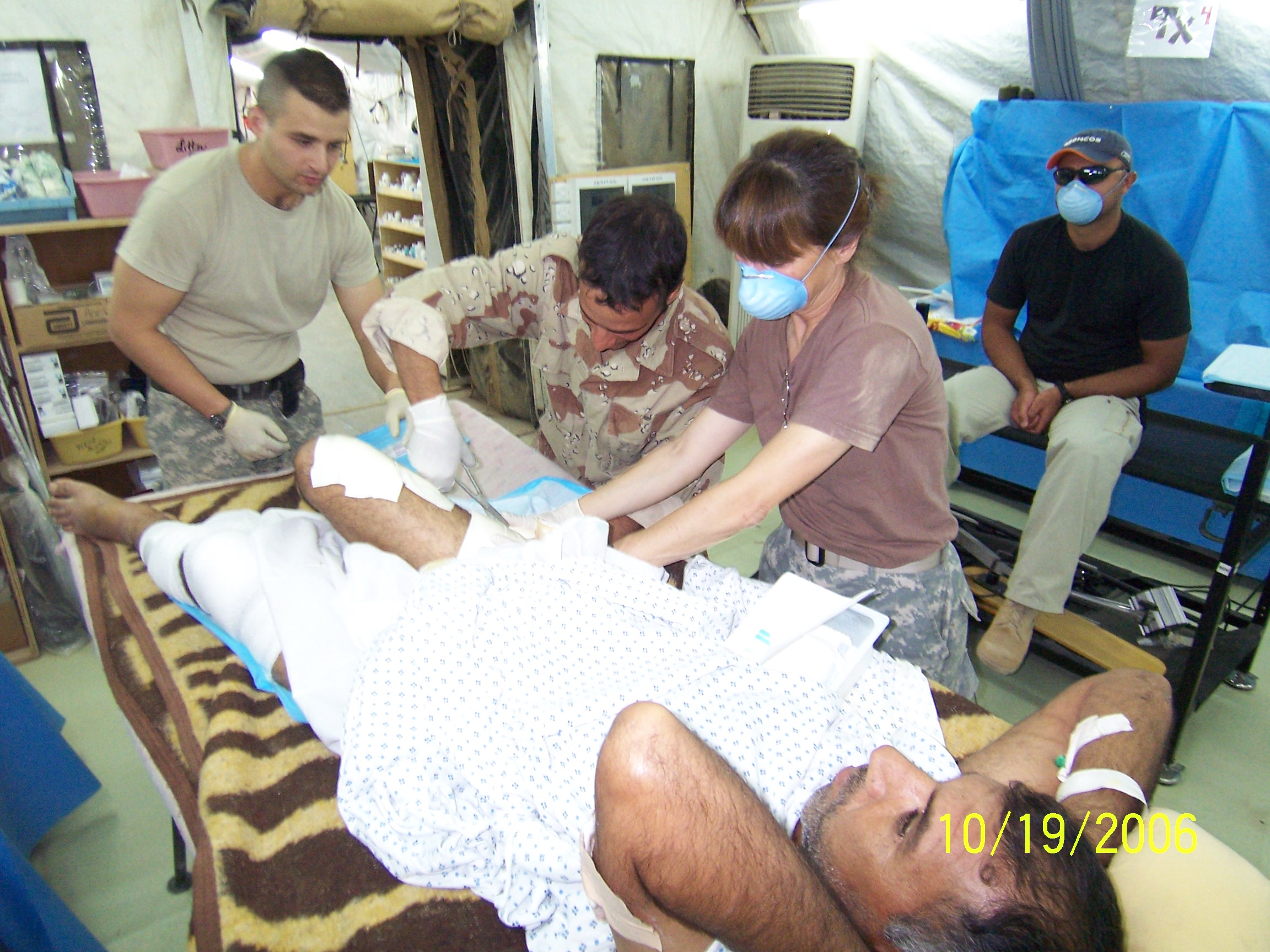
Recently, Medical Executive-Post writers caught up with Captain Cecelia T. Perez for more information on the exact circumstances surrounding her Bronze Star Medal Award.
Interview Synopsis
Self-effacing and humble, Cecelia simply stated in her email interview that the medal was “basically for saving lives” while in Iraq.
Only when pressed for more details, did Cecelia explain – “My friend Bill and I set up trauma sites separate from the rest of our company. First, in Talafar, Iraq for five months and then at COP Gabe in Baquoba, Iraq during our brigade’s retaking of that city.”
She noted that “we had some serious trauma to deal with as we responded to Iraqi Army mass casualty events at their aide station which was also located near us.”
Unfortunately, “they did not have a PA or doctor like we did, so Bill and I, along with our medics, responded to their requests for help.”
Of course, Cecelia mentioned several times that it was a medical team group effort.
But, “they obviously appreciated our efforts as gender, racial, and cultural barriers disappear in the midst of the bleeding and the wounded.”
Assessment
We say: A real American Army Hero would have it no other way!
Conclusion
Your thoughts and comments on this ME-P are appreciated. Feel free to review our top-left column, and top-right sidebar materials, links, URLs and related websites, too. Then, subscribe to the ME-P. It is fast, free and secure.
Speaker: If you need a moderator or speaker for an upcoming event, Dr. David E. Marcinko; MBA – Publisher-in-Chief of the Medical Executive-Post – is available for seminar or speaking engagements. Contact: MarcinkoAdvisors@msn.com
OUR OTHER PRINT BOOKS AND RELATED INFORMATION SOURCES:
- PRACTICES: www.BusinessofMedicalPractice.com
- HOSPITALS: http://www.crcpress.com/product/isbn/9781466558731
- CLINICS: http://www.crcpress.com/product/isbn/9781439879900
- ADVISORS: www.CertifiedMedicalPlanner.org
- FINANCE: Financial Planning for Physicians and Advisors
- INSURANCE: Risk Management and Insurance Strategies for Physicians and Advisors
- Dictionary of Health Economics and Finance
- Dictionary of Health Information Technology and Security
- Dictionary of Health Insurance and Managed Care


Share this:

Filed under: Military Medicine | Tagged: Bronze Star Medal, cecelia perez, Military Medicine | 4 Comments »



 The Leading Business Education Network for Doctors, Financial Advisors and Health Industry Consultants