







 Support our online development, and advance our onground research initiatives in free market economics, as we seek to showcase the brightest Next-Gen minds.
THE ME-P DISCLAIMER: Posts, comments and opinions do not necessarily represent iMBA, Inc., but become our property after submission. Copyright © 2006 to-date. iMBA, Inc allows colleges, universities, medical and financial professionals and related clinics, hospitals and non-profit healthcare organizations to distribute our proprietary essays, photos, videos, audios and other documents; etc. However, please review copyright and usage information for each individual asset before submission to us, and/or placement on your publication or web site. Attestation references, citations and/or back-links are required. All other assets are property of the individual copyright holder.
Support our online development, and advance our onground research initiatives in free market economics, as we seek to showcase the brightest Next-Gen minds.
THE ME-P DISCLAIMER: Posts, comments and opinions do not necessarily represent iMBA, Inc., but become our property after submission. Copyright © 2006 to-date. iMBA, Inc allows colleges, universities, medical and financial professionals and related clinics, hospitals and non-profit healthcare organizations to distribute our proprietary essays, photos, videos, audios and other documents; etc. However, please review copyright and usage information for each individual asset before submission to us, and/or placement on your publication or web site. Attestation references, citations and/or back-links are required. All other assets are property of the individual copyright holder.


By Staff Reporters
***
***
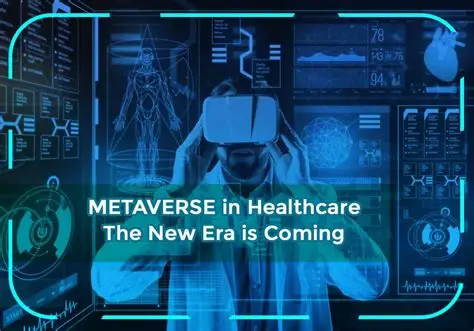
The idea of a metaverse in medicine has moved from speculative fiction to a rapidly emerging frontier that could reshape how people learn, receive care, and interact with health systems. As digital and physical realities blend, medicine gains a new arena where clinicians, patients, and researchers can collaborate in ways that were previously impossible. The metaverse is not a single technology but a convergence of virtual reality, augmented reality, artificial intelligence, and persistent digital environments. Together, these tools create immersive spaces that can transform medical education, clinical practice, and patient engagement.
🌐 A New Dimension for Medical Education
Medical training has always relied on hands‑on experience, but access to real clinical scenarios can be limited. In the metaverse, students can enter fully interactive simulations that replicate complex medical environments.
- immersive anatomy exploration: Learners can walk through a beating heart or manipulate organs in three dimensions, gaining spatial understanding that textbooks cannot match.
- risk‑free surgical practice: Virtual operating rooms allow trainees to rehearse procedures repeatedly without endangering patients.
- collaborative global classrooms: Students from different countries can gather in shared virtual spaces, learning from instructors and peers regardless of geography.
These environments democratize access to high‑quality training and reduce the disparities that often arise from unequal resources.
🏥 Transforming Clinical Care
The metaverse also opens new possibilities for patient care. Virtual clinics can extend the reach of healthcare systems, especially for people who struggle with mobility, distance, or chronic conditions.
- virtual consultations in 3D environments: Instead of a flat video call, patients and clinicians can meet in a shared space that supports richer communication.
- remote monitoring with augmented overlays: Clinicians can visualize patient data in real time, layered over the patient’s digital avatar.
- enhanced rehabilitation experiences: Physical therapy can become more engaging through gamified exercises in virtual worlds.
These innovations do not replace traditional care but enhance it, offering more flexible and personalized options.
🧠 Mental Health and Therapeutic Immersion
Mental health care stands to benefit significantly from immersive environments. Virtual spaces can be designed to support therapeutic goals, offering controlled settings for exposure therapy, mindfulness, or social skills training.
- customizable calming environments: Patients can enter serene landscapes that promote relaxation and emotional regulation.
- safe exposure scenarios: Therapists can guide patients through anxiety‑provoking situations at a pace tailored to their needs.
- supportive group spaces: People can join virtual communities that reduce isolation and foster connection.
These tools expand the therapeutic toolkit, giving clinicians new ways to meet patients where they are.
***
***
🔬 Research and Innovation
The metaverse also provides a powerful platform for medical research. Scientists can model diseases, simulate drug interactions, or visualize complex datasets in three dimensions.
- collaborative research labs: Teams across the world can manipulate shared models and run simulations together.
- digital twins of organs or systems: Researchers can test hypotheses on virtual replicas before moving to real‑world trials.
- population‑level simulations: Public health experts can model outbreaks or interventions in dynamic virtual environments.
These capabilities accelerate discovery and reduce the cost and risk associated with early‑stage experimentation.
🛡️ Ethical and Practical Challenges
Despite its promise, the metaverse in medicine raises important questions.
- data privacy in immersive environments: Sensitive health information must be protected in spaces that collect vast amounts of biometric data.
- equitable access to technology: Not all patients or institutions can afford advanced hardware or high‑speed connectivity.
- clinical validation of virtual tools: Immersive therapies and simulations must be rigorously tested to ensure safety and effectiveness.
Addressing these challenges is essential to building trust and ensuring that the metaverse enhances, rather than complicates, healthcare.
***
***
🌟 A Future of Blended Realities
The metaverse in medicine represents a shift toward more interactive, personalized, and connected healthcare. It offers new ways to teach, treat, and discover, while also demanding thoughtful governance and ethical oversight. As technology continues to evolve, the boundary between physical and digital care will blur, creating a hybrid model that supports both clinicians and patients. The metaverse is not a replacement for human connection but a tool that can deepen it, offering richer experiences and more accessible pathways to health.
If you want, I can expand this into a longer paper with sections or help you refine the tone for academic submission.
COMMENTS APPRECIATED
SPEAKING: Dr. Marcinko will be speaking and lecturing, signing and opining, teaching and preaching, storming and performing at many locations throughout the USA this year! His tour of witty and serious pontifications may be scheduled on a planned or ad-hoc basis; for public or private meetings and gatherings; formally, informally, or over lunch or dinner. All medical societies, financial advisory firms or Broker-Dealers are encouraged to submit an RFP for speaking engagements: CONTACT: Ann Miller RN MHA at MarcinkoAdvisors@outlook.com -OR- http://www.MarcinkoAssociates.com
Like, Refer and Subscribe
***
***
Share this:

Filed under: iMBA, Inc. | Tagged: david marcinko |
 The Leading Business Education Network for Doctors, Financial Advisors and Health Industry Consultants
Leave a comment