ME-P SYNDICATIONS:
WSJ.com,
CNN.com,
Forbes.com,
WashingtonPost.com,
BusinessWeek.com,
USNews.com, Reuters.com,
TimeWarnerCable.com,
e-How.com,
News Alloy.com,
and Congress.org


BOARD CERTIFICATION EXAM STUDY GUIDES
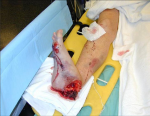
Lower Extremity Trauma
[Click on Image to Enlarge]
The “Medical Executive-Post” is about connecting doctors, health care executives and modern consulting advisors. It’s about free-enterprise, business, practice, policy, personal financial planning and wealth building capitalism. We have an attitude that’s independent, outspoken, intelligent and so Next-Gen; often edgy, usually controversial. And, our consultants “got fly”, just like U. Read it! Write it! Post it! “Medical Executive-Post”. Call or email us for your FREE advertising and sales consultation TODAY [678.779.8597] Email: MarcinkoAdvisors@outlook.com



ePodiatryConsentForms.com
Suite #5901 Wilbanks Drive, Norcross, Georgia, 30092 USA [1.678.779.8597]. Our location is real and we are now virtually enabled to assist new long distance clients and out-of-town colleagues.
If you want the opportunity to work with leading health care industry insiders, innovators and watchers, the “ME-P” may be right for you? We are unbiased and operate at the nexus of theoretical and applied R&D. Collaborate with us and you’ll put your brand in front of a smart & tightly focused demographic; one at the forefront of our emerging healthcare free marketplace of informed and professional “movers and shakers.” Our Ad Rate Card is available upon request [678-779-8597].

“Providing Management, Financial and Business Solutions for Modernity”
Whether you’re a mature CXO, physician or start-up entrepreneur in need of management, financial, HR or business planning information on free markets and competition, the "Medical Executive-Post” is the online place to meet for Capitalism 2.0 collaboration.

Support our online development, and advance our onground research initiatives in free market economics, as we seek to showcase the brightest Next-Gen minds.
THE ME-P DISCLAIMER: Posts, comments and opinions do not necessarily represent iMBA, Inc., but become our property after submission. Copyright © 2006 to-date. iMBA, Inc allows colleges, universities, medical and financial professionals and related clinics, hospitals and non-profit healthcare organizations to distribute our proprietary essays, photos, videos, audios and other documents; etc. However, please review copyright and usage information for each individual asset before submission to us, and/or placement on your publication or web site. Attestation references, citations and/or back-links are required. All other assets are property of the individual copyright holder.





 ***
***
 The Leading Business Education Network for Doctors, Financial Advisors and Health Industry Consultants
77% of Employers Think Virtual Visits Will Decrease Healthcare Costs
Willis Towers Watson recently released survey results from their ‘2020 Health Care Delivery Survey.’ Here are some key findings from the report:
• 66% of employers cover tele-behavioral health services through their insurance carriers.
• A majority of employers offer telephone (76%) and video-based virtual care visits (72%).
• 3 in 4 employers (77%) think virtual visits will decrease the cost of healthcare.
• 52% of employers think telemedicine will be an important priority post-pandemic.
Source: Willis Towers Watson, October 16, 2020
LikeLike
Telemedicine Valuation UPDATE
https://www.healthcapital.com/hcc/newsletter/11_20/HTML/TELE/convert_telemedicine_regulatory_11.21.20.php
Dr. David E. Marcinko MBA
LikeLike
Tele – Medicine is here to stay
As more baby boomers continue to age, the younger generations love to connect virtually. Especially for smaller or more common health problems that can be resolved easily.
The Covid pandemic has accelerated adoption in most countries out of necessity. But, the bi-product of more efficiency and lower costs in certain scenarios have providers taking a hard look at this delivery model.
The real question is which companies and healthcare professionals can work through the regulatory headaches needed to deliver quality outcomes virtually. It seems to also expand hours of service and also expands the reach of any physician in being able to connect anywhere you have reliable internet.
Take a look at the statistics of ‘Teladoc’ stock over the past year, especially around last February or March through today. The markets are speaking for themselves on where they see tele medicine going in the not so distant future!
JOE
LikeLike
Carbon Foot Print
Scientists discovered that— by turning off your camera during a video conference or telehealth visit— can help cut water, land, and carbon emission impact.
A recent study conducted by Purdue University revealed that 12 liters of water are used and a range of 150 to 1000 grams of carbon dioxide are emitted every 60 minutes of streaming or video.
Ivan
LikeLike
INTIMACY CAN BE ELECTRONIC
Today’s electronic mediums make possible yet another kind of intimacy. ICTs—information and communication technologies—enable 24/7 monitoring of basic information such as blood pressure, glucose levels, pulse, and respiration. In one study, an ICT not only made it easier for patients to stay in touch with their doctors, the outcomes were also significantly better. Today, Hippocrates is no longer trailing patients around the house to keep track of their snacks and moods. But Hippocrates has gone digital in the form of a wearable device that records subtle changes in biological markers and communicates them instantaneously to a health provider.
While this is obviously a great advance, we suggest you pause for a moment before plugging in. Why? ICTs and social media tools can make a difference to one of the most important dimensions—physiological outcomes. But you can have the latest interactive technology at your disposal and still fail to be connected.
A story that a friend told us shows how. One morning, her elderly father was touching up the paint on his sailboat. Nearby, another boat-owner, who happened to be an emergency medical technician, noticed her father was struggling to breathe and that his lips had turned purple. A trip to the local community hospital led to a barrage of high-tech tests and procedures, a diagnosis of emphysema, later complications with cerebral hematomas, and hospitalizations and re-hospitalizations that brought him into contact with a neurologist, a neurosurgeon, a cardiologist, and a pulmonologist. Throughout her father’s medical ordeal, the team of specialists stayed in touch with each other and the primary care physician via various electronic media. But one person remained out of the loop—her father. One day, six months into the experience, the primary care physician phoned our friend’s mother to check on his patient. Her father recalls thinking, “Why was he calling her?” The physician was communicating, but he was emotionally disconnected.
The moral of the story: communication needs to be patient-centered in both electronic and psychological terms. That means understanding how someone likes to communicate and making sure the medium fits the message. Electronic media are just part of the equation. The other is the doctor-patient relationship. Once a relationship is established, it may be fine to use e-mail to send information about dosage. But delivering a new diagnosis may require the extra effort of scheduling a phone call or a face-to-face visit. Today, since you have so many Health 2.0 choices, it takes some effort to select the right way to communicate in a particular situation.
Dr. David E. Marcinko MBA
LikeLike