







 Support our online development, and advance our onground research initiatives in free market economics, as we seek to showcase the brightest Next-Gen minds.
THE ME-P DISCLAIMER: Posts, comments and opinions do not necessarily represent iMBA, Inc., but become our property after submission. Copyright © 2006 to-date. iMBA, Inc allows colleges, universities, medical and financial professionals and related clinics, hospitals and non-profit healthcare organizations to distribute our proprietary essays, photos, videos, audios and other documents; etc. However, please review copyright and usage information for each individual asset before submission to us, and/or placement on your publication or web site. Attestation references, citations and/or back-links are required. All other assets are property of the individual copyright holder.
Support our online development, and advance our onground research initiatives in free market economics, as we seek to showcase the brightest Next-Gen minds.
THE ME-P DISCLAIMER: Posts, comments and opinions do not necessarily represent iMBA, Inc., but become our property after submission. Copyright © 2006 to-date. iMBA, Inc allows colleges, universities, medical and financial professionals and related clinics, hospitals and non-profit healthcare organizations to distribute our proprietary essays, photos, videos, audios and other documents; etc. However, please review copyright and usage information for each individual asset before submission to us, and/or placement on your publication or web site. Attestation references, citations and/or back-links are required. All other assets are property of the individual copyright holder.


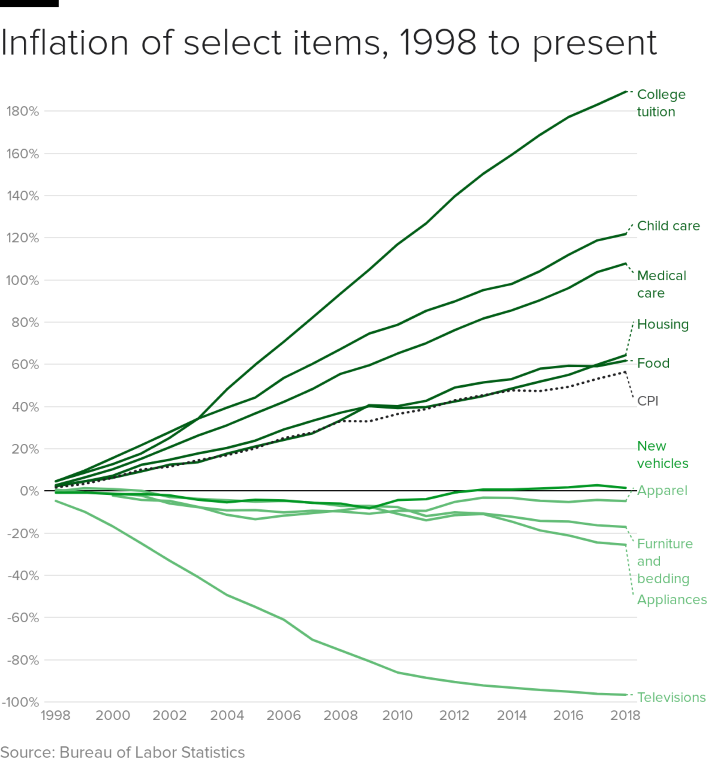
1998 to Present
By U.S. BLS
***
***
Conclusion
Your thoughts and comments on this ME-P are appreciated. Feel free to review our top-left column, and top-right sidebar materials, links, URLs and related websites, too. Then, subscribe to the ME-P. It is fast, free and secure.
Speaker: If you need a moderator or speaker for an upcoming event, Dr. David E. Marcinko; MBA – Publisher-in-Chief of the Medical Executive-Post – is available for seminar or speaking engagements.
Book Marcinko: https://medicalexecutivepost.com/dr-david-marcinkos-bookings/
Subscribe: MEDICAL EXECUTIVE POST for curated news, essays, opinions and analysis from the public health, economics, finance, marketing, IT, business and policy management ecosystem.
DOCTORS:
“Insurance & Risk Management Strategies for Doctors” https://tinyurl.com/ydx9kd93
“Fiduciary Financial Planning for Physicians” https://tinyurl.com/y7f5pnox
“Business of Medical Practice 2.0” https://tinyurl.com/yb3x6wr8
HOSPITALS:
“Financial Management Strategies for Hospitals” https://tinyurl.com/yagu567d
“Operational Strategies for Clinics and Hospitals” https://tinyurl.com/y9avbrq5
***
 8
8
Share this:

Filed under: Financial Planning | Tagged: inflation rates |
 The Leading Business Education Network for Doctors, Financial Advisors and Health Industry Consultants
PAYCHECK INFLATION
Inflation is a common economic term and a relatively simple concept. One straightforward definition at thebalance.com by financial journalist Kimberly Amadeo is, “Inflation is the increase in the prices of goods and services over time.”
Yet applying the concept of inflation to our income and expenses in a practical way seems to be incredibly difficult. Amadeo goes on to say, “As prices rise, your money buys less. That’s how it reduces your standard of living over time.”
Inflation is currently just over 2.2% a year. That means the $3.49 cup of coffee I enjoyed while writing this article will cost $3.57 next year. A new house that cost $250,000 to build last year will cost $255,500 to build this year.
This seems simple enough until we start applying it to the salary we earn. If you earned $50,000 last year, and inflation is 2.2%, then you will need to earn $51,100 this year just to maintain the same standard of living.
If your employer gives you a “raise” of $1,100, do you really have more money? Yes, you have more dollars, but in terms of purchasing power you haven’t received a raise at all. Yet your brain probably equates an increase in dollars with an increase in purchasingpower, which is absolutely not the case.
If in the same situation you received a $500 “raise,” you would actually see a decrease of $600 in your purchasing power. Your salary would increase to $50,500, but it would take $51,100 to buy the same goods and services.
This is probably clear enough so far. Let’s take it to the next step. What happens in a year, like 2015, when there is almost no inflation? If you didn’t receive a pay increase in 2015, it was no different than receiving a $1,100 raise in 2019. Your purchasingpower remained the same in both years.
Yet imagine yourself in 2015 learning that you would get no salary increase. How would you feel about not receiving a raise? Would the feelings be lighter if you knew that there was no inflation that year? Now fast forward to 2019 and receiving a raise of $1,100.How do you feel? Chances are you feel happier and more valued in 2019 than in 2015, even though the impact on your purchasing power would be the same.
Over time prices generally go up at least slightly, but occasionally they decrease and we see deflation. In 1949, the Consumer Price Index actually decreased by 2.1%. This meant in 1949 you would only need $48,950 to buy the same goods and services that $50,000purchased in 1948. Even if your salary stayed the same, you would have received an increase in purchasing power of $1,050.
Imagine that in 1949 your employer reduced your salary to $48,950. How would you feel? Angry, hurt, devalued? Why? Your purchasing power and standard of living would be the same as the previous year.
If we understand the concept of inflation, why is our emotional reaction to salary increases and decreases so seemingly illogical? It isn’t illogical at all when we recognize the response comes from our emotional brain (limbic system), not our thinking brain(cerebral cortex). The emotional brain sees the dollar amount and responds almost instantly. If we get more dollars, it releases happy chemicals; if we get fewer, it releases unhappy chemicals. It’s as primitive as that. It takes a relatively long time forthe cerebral cortex to kick in and try—often unsuccessfully—to talk the emotional brain down with the facts.
Given this process, I don’t think our understanding of inflation and purchasing power is going to change anytime soon.
Rick Kahler CFP
LikeLike