






 Support our online development, and advance our onground research initiatives in free market economics, as we seek to showcase the brightest Next-Gen minds.
THE ME-P DISCLAIMER: Posts, comments and opinions do not necessarily represent iMBA, Inc., but become our property after submission. Copyright © 2006 to-date. iMBA, Inc allows colleges, universities, medical and financial professionals and related clinics, hospitals and non-profit healthcare organizations to distribute our proprietary essays, photos, videos, audios and other documents; etc. However, please review copyright and usage information for each individual asset before submission to us, and/or placement on your publication or web site. Attestation references, citations and/or back-links are required. All other assets are property of the individual copyright holder.
Support our online development, and advance our onground research initiatives in free market economics, as we seek to showcase the brightest Next-Gen minds.
THE ME-P DISCLAIMER: Posts, comments and opinions do not necessarily represent iMBA, Inc., but become our property after submission. Copyright © 2006 to-date. iMBA, Inc allows colleges, universities, medical and financial professionals and related clinics, hospitals and non-profit healthcare organizations to distribute our proprietary essays, photos, videos, audios and other documents; etc. However, please review copyright and usage information for each individual asset before submission to us, and/or placement on your publication or web site. Attestation references, citations and/or back-links are required. All other assets are property of the individual copyright holder.


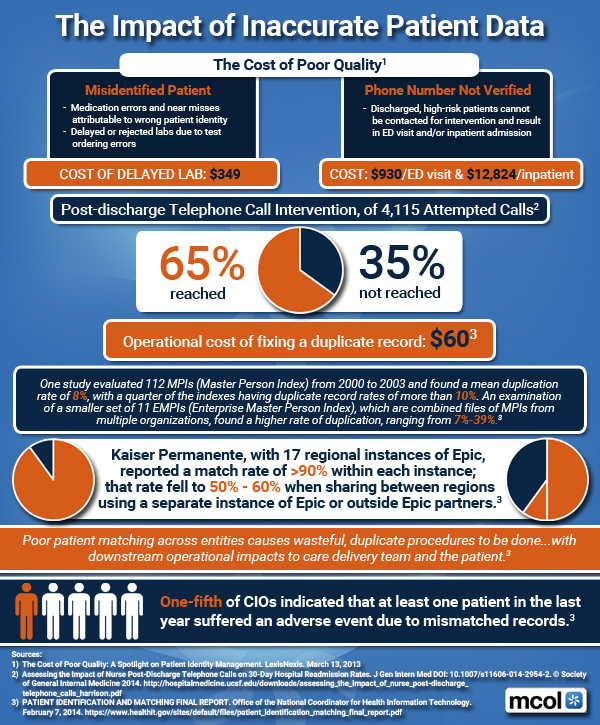
The Cost of Poor Quality
***
***
Conclusion
Your thoughts and comments on this ME-P are appreciated. Feel free to review our top-left column, and top-right sidebar materials, links, URLs and related websites, too. Then, subscribe to the ME-P. It is fast, free and secure.
***

***
Speaker: If you need a moderator or speaker for an upcoming event, Dr. David E. Marcinko; MBA – Publisher-in-Chief of the Medical Executive-Post – is available for seminar or speaking engagements. Contact: MarcinkoAdvisors@msn.com
OUR OTHER PRINT BOOKS AND RELATED INFORMATION SOURCES:
- PRACTICES: www.BusinessofMedicalPractice.com
- HOSPITALS: http://www.crcpress.com/product/isbn/9781466558731
- CLINICS: http://www.crcpress.com/product/isbn/9781439879900
- ADVISORS: www.CertifiedMedicalPlanner.org
- FINANCE: Financial Planning for Physicians and Advisors
- INSURANCE: Risk Management and Insurance Strategies for Physicians and Advisors
- Dictionary of Health Economics and Finance
- Dictionary of Health Information Technology and Security
- Dictionary of Health Insurance and Managed Care
***
[HOSPITAL OPERATIONS, ORGANIZATIONAL BEHAVIOR AND FINANCIAL MANAGEMENT COMPANION TEXTBOOK SET]


[Foreword Dr. Phillips MD JD MBA LLM] [Foreword Dr. Nash MD MBA FACP]
***
Share this:

Filed under: Information Technology, Quality Initiatives, Research & Development | Tagged: Impact of Inaccurate Patient Data Analytics, The Cost of Poor Medical Quality, www.MCOL.com |
 The Leading Business Education Network for Doctors, Financial Advisors and Health Industry Consultants
Big-data initiatives have the potential to transform health care
http://www.mckinsey.com/insights/health_systems_and_services/the_big-data_revolution_in_us_health_care
Stakeholders that are committed to innovation, willing to build their capabilities, and open to a new view of value will likely be the first to reap the rewards of big data and help patients achieve better outcomes.
Donald
LikeLike
Mainframe systems and analytics
Most applicable to large hospitals, such a configuration is highly centralized. A large and powerful computer performs basically all the information processing for the institution and connects to multiple terminals that communicate with the mainframe to display the information at the user sites.
Hospital IT departments usually use in-house programmers to modify the core operating systems or applications programs such as billing and scheduling programs.
Brent Metfessl MD MS
LikeLike
The Healthcare Data Sharing Conundrum
An essay by DAN HOUSMAN
People are more likely to avoid loss than to seek gains. HIPAA creates a framework where it rewards risk adverse behavior for data sharing even when data sharing would ultimately be beneficial to the enterprise, the mission, and the patients. This is a general issue at the heart of making progress in healthcare regarding data sharing and interoperability. I have some new thoughts on how to bridge this divide.
Recently I read the book ‘Thinking, Fast and Slow’ by the Nobel Prize winning economist Daniel Kahneman PhD. This book discusses the concept of Prospect Theory.
In reading through it I could see a hint of why our industry has so much trouble trying to share medical records and in general has trouble sharing almost anything among trading partners and competitors. If you haven’t read about Prospect Theory, the following tests provide some of the basics into how humans make decisions about risk.
Decision 1: Which do you choose? Get $900 for sure OR 90% chance to get $1,000
Decision 2: Which do you choose? Lose $900 for sure OR 90% chance to lose $1,000
The common answer to #1 is to take the $900. The common answer to #2 is to take the 90% chance to avoid the loss.
As a result, we take risks to avoid danger but avoid risks when we see certain rewards. This behavior is relevant to data sharing and access to PHI and can be instructive on how people will approach risk.
http://thehealthcareblog.com/blog/2016/03/28/the-healthcare-data-sharing-conundrum/
Caleb
LikeLike
Hardest part of population health and precision medicine?
First-moving hospitals are thinking about how to transform themselves from data-driven to information-driven organizations, able to offer drastically improved patient experience akin to Amazon and Google.
But it’s not easy.
http://www.govhealthit.com/news/big-data-hardest-part-population-health-and-precision-medicine?topic=34&mkt_tok=3RkMMJWWfF9wsRonuaXPe%2B%2FhmjTEU5z16u8sUKK%2Fh4kz2EFye%2BLIHETpodcMTcZnMbrYDBceEJhqyQJxPr3MLtINwNlqRhPrCg%3D%3D
Simon
LikeLike