ME-P SYNDICATIONS:
WSJ.com,
CNN.com,
Forbes.com,
WashingtonPost.com,
BusinessWeek.com,
USNews.com, Reuters.com,
TimeWarnerCable.com,
e-How.com,
News Alloy.com,
and Congress.org



BOARD CERTIFICATION EXAM STUDY GUIDES
Lower Extremity Trauma
[Click on Image to Enlarge]
The “Medical Executive-Post” is about connecting doctors, health care executives and modern consulting advisors. It’s about free-enterprise, business, practice, policy, personal financial planning and wealth building capitalism. We have an attitude that’s independent, outspoken, intelligent and so Next-Gen; often edgy, usually controversial. And, our consultants “got fly”, just like U. Read it! Write it! Post it! “Medical Executive-Post”. Call or email us for your FREE advertising and sales consultation TODAY [678.779.8597] E-mail: MarcinkoAdvisors1738@outlook.com



ePodiatryConsentForms.com
Suite #5901 Wilbanks Drive, Norcross, Georgia, 30092 USA [1.678.779.8597]. Our location is real and we are now virtually enabled to assist new long distance clients and out-of-town colleagues.
If you want the opportunity to work with leading health care industry insiders, innovators and watchers, the “ME-P” may be right for you? We are unbiased and operate at the nexus of theoretical and applied R&D. Collaborate with us and you’ll put your brand in front of a smart & tightly focused demographic; one at the forefront of our emerging healthcare free marketplace of informed and professional “movers and shakers.” Our Ad Rate Card is available upon request [678-779-8597].

“Providing Management, Financial and Business Solutions for Modernity”
Whether you’re a mature CXO, physician or start-up entrepreneur in need of management, financial, HR or business planning information on free markets and competition, the "Medical Executive-Post” is the online place to meet for Capitalism 2.0 collaboration.

Support our online development, and advance our onground research initiatives in free market economics, as we seek to showcase the brightest Next-Gen minds.
THE ME-P DISCLAIMER: Posts, comments and opinions do not necessarily represent iMBA, Inc., but become our property after submission. Copyright © 2006 to-date. iMBA, Inc allows colleges, universities, medical and financial professionals and related clinics, hospitals and non-profit healthcare organizations to distribute our proprietary essays, photos, videos, audios and other documents; etc. However, please review copyright and usage information for each individual asset before submission to us, and/or placement on your publication or web site. Attestation references, citations and/or back-links are required. All other assets are property of the individual copyright holder.







 The Leading Business Education Network for Doctors, Financial Advisors and Health Industry Consultants
Think ACOs and Bundled Payments are Inevitable?
http://diseasemanagementcareblog.blogspot.com/2014/08/think-bundled-payment-is-inevitable.html
Well, think again!
Grant
LikeLike
The relationship between consolidation and prices
According to Aaron Carroll MD, over at the Incidental Economist, one of the biggest concerns about ACOs is that the push towards provider consolidation may lead to increased spending that might overwhelm the savings they’re supposed to generate.
A just-published paper in JAMA is on point. “Physician Practice Competition and Prices Paid by Private Insurers for Office Visits“:
He reiterates the following points:
IMPORTANCE Physician practice consolidation could promote higher-quality care but may also create greater economic market power that could lead to higher prices for physician services.
OBJECTIVE To assess the relationship between physician competition and prices paid by private preferred provider organizations (PPOs) for 10 types of office visits in 10 prominent specialties.
DESIGN AND SETTING Retrospective study in 1058 US counties in urbanized areas, representing all 50 states, examining the relationship between measured physician competition and prices paid for office visits in 2010 and the relationship between changes in competition and prices between 2003 and 2010, using regression analysis to control for possible confounding factors.
EXPOSURES Variation in the mean Hirschman-Herfindahl Index (HHI) of physician practices within a county by specialty (HHIs range from 0, representing maximally competitive markets, to 10 000 in markets served by a single [monopoly] practice).
MAIN OUTCOMES AND MEASURES Mean price paid by county to physicians in each specialty by private PPOs for intermediate office visits with established patients (Current Procedural Terminology [CPT] code 99213) and a price index measuring the county-weighted mean price for 10 types of office visits with new and established patients (CPT codes 99201-99205, 99211-99215) relative to national mean prices.
http://theincidentaleconomist.com/wordpress/the-relationship-between-consolidation-and-prices/
Ann Miller RN MHA
LikeLike
ACOs Are Doomed / No They’re Not
A number of pundits are citing the systemic failure of ACOs, after additional Pioneer ACOs announced withdrawal from the program – Where do you weigh in on the prognosis for Medicare and Commercial ACOs over the next several years?”
Please opine.
Hope R. Hetico RN MHA
LikeLike
Global Physician “Capitation” Payments Making a Comeback
Since passage of the PP-ACA many insurance carriers are making a major change in the way they pay physicians? It’s moving from [discounted] fee-for-service pay to per-patient per-year capitation rates, adjusted for age and sickness (severity adjustments), plus a bonus for those MDs who improve patient health status. No definition of this term was given; however. Under the new “incentive” plan, these plans hope to transfer risk to primary medical care groups.
Typically, capitation will cover all primary care, specialist, counselor and hospital costs. Interestingly, BCBS has publicly denied that this system is “capitation”, and assured the public that it has safeguards in place to make sure patients won’t be under-treated and doctors won’t be underpaid.
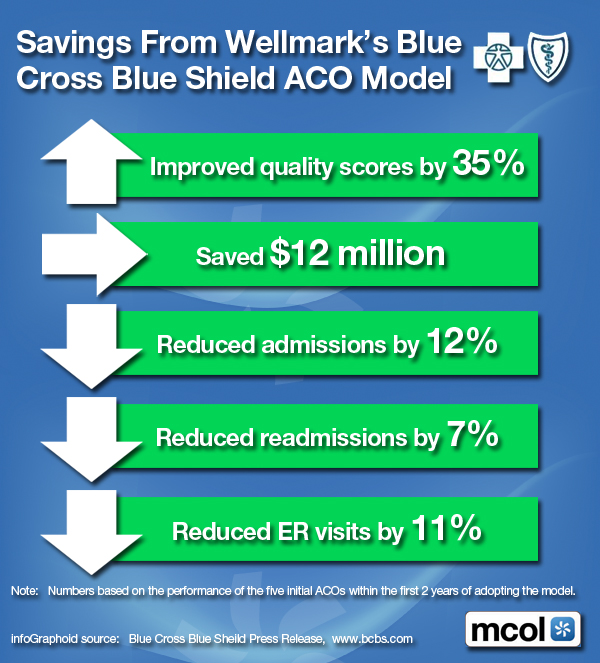
Yet, BCBS for the State of Massachusetts hopes to cut the growth in medical costs in half in two to four years among providers who accept this cloaked global capitation-redux.
Dr. David Edward Marcinko MBA
LikeLike