





 Support our online development, and advance our onground research initiatives in free market economics, as we seek to showcase the brightest Next-Gen minds.
THE ME-P DISCLAIMER: Posts, comments and opinions do not necessarily represent iMBA, Inc., but become our property after submission. Copyright © 2006 to-date. iMBA, Inc allows colleges, universities, medical and financial professionals and related clinics, hospitals and non-profit healthcare organizations to distribute our proprietary essays, photos, videos, audios and other documents; etc. However, please review copyright and usage information for each individual asset before submission to us, and/or placement on your publication or web site. Attestation references, citations and/or back-links are required. All other assets are property of the individual copyright holder.
Support our online development, and advance our onground research initiatives in free market economics, as we seek to showcase the brightest Next-Gen minds.
THE ME-P DISCLAIMER: Posts, comments and opinions do not necessarily represent iMBA, Inc., but become our property after submission. Copyright © 2006 to-date. iMBA, Inc allows colleges, universities, medical and financial professionals and related clinics, hospitals and non-profit healthcare organizations to distribute our proprietary essays, photos, videos, audios and other documents; etc. However, please review copyright and usage information for each individual asset before submission to us, and/or placement on your publication or web site. Attestation references, citations and/or back-links are required. All other assets are property of the individual copyright holder.


More on Emerging Information and Communication Technologies
[By Jennifer Tomasik MS, © iMBA Inc., All rights reserved. USA]
 Today’s electronic and social media make possible a certain kind of healthcare intimacy.
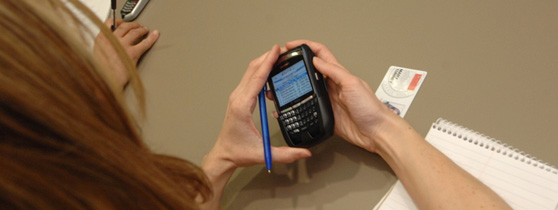
ICTs—information and communication technologies—enable 24/7 monitoring of basic information such as blood pressure, glucose levels, pulse, and respiration.
ICTs
In one study, an ICT not only made it easier for patients to stay in touch with their doctors, the outcomes were also significantly better. Today, Hippocrates is no longer trailing patients around the house to keep track of their snacks and moods.
But, Hippocrates has gone digital in the form of a wearable device that records subtle changes in biological markers and communicates them instantaneously to a health provider
Taking a Pause
While this is obviously a great advance, we suggest you pause for a moment before plugging in. Why? ICTs and social media tools can make a difference to one of the most important dimensions—physiological outcomes. But you can have the latest interactive technology at your disposal and still fail to be connected.
Example:
A story that a friend told us shows how. One morning, her elderly father was touching up the paint on his sailboat. Nearby, another boat-owner, who happened to be an emergency medical technician, noticed her father was struggling to breathe and that his lips had turned purple. A trip to the local community hospital led to a barrage of high-tech tests and procedures, a diagnosis of emphysema, later complications with cerebral hematomas, and hospitalizations and re-hospitalizations that brought him into contact with a neurologist, a neurosurgeon, a cardiologist, and a pulmonologist. Throughout her father’s medical ordeal, the team of specialists stayed in touch with each other and the primary care physician via various electronic media.
But, one person remained out of the loop—her father. One day, six months into the experience, the primary care physician phoned our friend’s mother to check on his patient. Her father recalls thinking, “Why was he calling her?” The physician was communicating, but he was emotionally disconnected.
The Moral
The moral of the story: communication needs to be patient-centered in both electronic and psychological terms. That means understanding how someone likes to communicate and making sure the medium fits the message. Electronic media are just part of the equation. The other is the doctor-patient relationship. Once a relationship is established, it may be fine to use e-mail to send information about dosage.
But, delivering a new diagnosis may require the extra effort of scheduling a phone call or a face-to-face visit.
Assessment
Today, since you have so many Health 2.0 choices, it takes some effort to select the right way to communicate in a particular situation.
ABOUT THE AUTHOR
Jennifer Tomasik is a Principal at CFAR, a boutique management consulting firm specializing in strategy, change and collaboration. Jennifer has worked in the health care sector for nearly 20 years, with expertise in strategic planning, large-scale organizational and cultural change, public health, and clinical quality measurement. She leads CFAR’s Health Care practice. Jennifer has a Master’s in Health Policy and Management from the Harvard School of Public Health. Her clients include some of the most prestigious hospitals, health systems and academic medical centers in the country.
Conclusion
Your thoughts and comments on this ME-P are appreciated. Feel free to review our top-left column, and top-right sidebar materials, links, URLs and related websites, too. Then, subscribe to the ME-P. It is fast, free and secure.
Link: http://feeds.feedburner.com/HealthcareFinancialsthePostForcxos
Speaker: If you need a moderator or speaker for an upcoming event, Dr. David E. Marcinko; MBA – Publisher-in-Chief of the Medical Executive-Post – is available for seminar or speaking engagements. Contact: MarcinkoAdvisors@msn.com
OUR OTHER PRINT BOOKS AND RELATED INFORMATION SOURCES:
DICTIONARIES: http://www.springerpub.com/Search/marcinko
PHYSICIANS: www.MedicalBusinessAdvisors.com
PRACTICES: www.BusinessofMedicalPractice.com
HOSPITALS: http://www.crcpress.com/product/isbn/9781466558731
CLINICS: http://www.crcpress.com/product/isbn/9781439879900
BLOG: www.MedicalExecutivePost.com
FINANCE: Financial Planning for Physicians and Advisors
INSURANCE: Risk Management and Insurance Strategies for Physicians and Advisors



Share this:

Filed under: Information Technology | Tagged: Hippocrates, information and communication technologies, Jennifer Tomasik |
 The Leading Business Education Network for Doctors, Financial Advisors and Health Industry Consultants
Jennifer,
I do think the future of health care is in mobile and related technologies.
Interesting and thought-provoking post.
Janice
LikeLike
EHR Empowerment; or Not!
Historically, healthcare has always been a document-intensive industry. And, despite the widespread adoption of electronic health records (EHRs), it remains so today.
For example, in a recent survey of healthcare organizations reported in Information Week magazine, three quarters of respondents stated that they had some form of EHR system implemented. Yet, despite that impressive rate of adoption, 80% of respondents reported they were still relying on paper records – including paper charts, physician notes, physician orders and registrations documents.
What do you think about that?
Greta
LikeLike
Five tactics to enrich patient engagement
Here’s how one practice is tethering open communications and portal technology to help patients more actively participate in their own healthcare.
http://www.medicalpracticeinsider.com/best-practices/5-tactics-enrich-patient-engagement?email=MARCINKOADVISORS@MSN.COM&GroupID=116654
So, new-wave bedside manner?
Ann Miller RN MHA
LikeLike
Baby Boomers Who are Unhappy with Their Care Tend to Tell Their Physician [Millennials Tend to Tell Everyone Else]
Millennials may soon outnumber the Baby Boomers in your practice, and they tend to approach healthcare professionals with different customer service expectations according to a global patient survey of 3,000 people conducted by Nuance Communications and reported in the August edition of their Art of Medicine series. The 81 million U.S. residents of Millennial age (15-34) are nearly twice as likely as seniors over age 65, to seek doctors based on recommendations from family and friends.
More than half of Millennials surveyed look online for health information before they come to the office. When seeing the doctor, they rank time for discussion and verbal explanation of recommendations as the most important factors in their satisfaction with medical care. When they feel rushed or dissatisfied with care, more than 60% are likely to tell their friends rather than complain to their providers; those frustrations are likely to register on social media and in online ratings of professionals.
In contrast, if Boomers are not satisfied with care, more than half indicate they would tell their healthcare professional directly.
Source: RSi Communications via Univadis [9/21/15]
*****************************************************************
And … When patient-centered care becomes patient-dictated care
“I’d like an MRI for my leg pain. I haven’t had an MRI for many years, and I’m worried.”
These were some of the first words I heard from a patient I was seeing for a new patient visit. Based on this patient’s story and physical exam, her pain was most consistent with a muscle strain. My preferred approach to manage this complaint was to ask the patient to rest her …
http://www.kevinmd.com/blog/2015/09/when-patient-centered-care-becomes-patient-dictated-care.html
Greta
LikeLike