





 Support our online development, and advance our onground research initiatives in free market economics, as we seek to showcase the brightest Next-Gen minds.
THE ME-P DISCLAIMER: Posts, comments and opinions do not necessarily represent iMBA, Inc., but become our property after submission. Copyright © 2006 to-date. iMBA, Inc allows colleges, universities, medical and financial professionals and related clinics, hospitals and non-profit healthcare organizations to distribute our proprietary essays, photos, videos, audios and other documents; etc. However, please review copyright and usage information for each individual asset before submission to us, and/or placement on your publication or web site. Attestation references, citations and/or back-links are required. All other assets are property of the individual copyright holder.
Support our online development, and advance our onground research initiatives in free market economics, as we seek to showcase the brightest Next-Gen minds.
THE ME-P DISCLAIMER: Posts, comments and opinions do not necessarily represent iMBA, Inc., but become our property after submission. Copyright © 2006 to-date. iMBA, Inc allows colleges, universities, medical and financial professionals and related clinics, hospitals and non-profit healthcare organizations to distribute our proprietary essays, photos, videos, audios and other documents; etc. However, please review copyright and usage information for each individual asset before submission to us, and/or placement on your publication or web site. Attestation references, citations and/or back-links are required. All other assets are property of the individual copyright holder.


Reporting on an Op-Ed by Drexel University’s Scot Silverstein
By Darrell K. Pruitt DDS
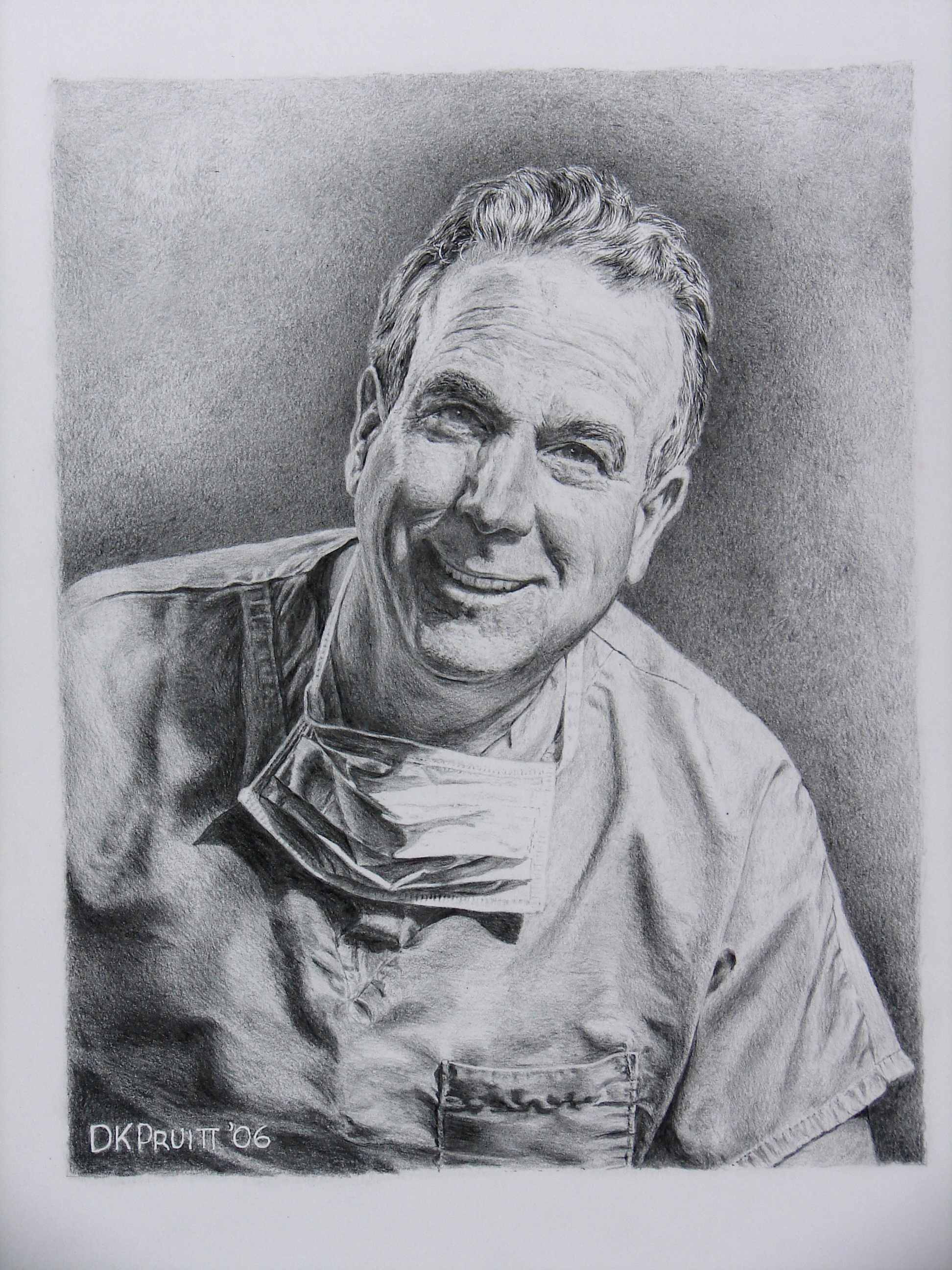 Recently, on Philly.com, I read the following interesting essay and counter-opinion.
“The flaws of electronic records – Drexel University’s Scot Silverstein is a leading critic of the rapid switch to computerized medical charts, saying the notion that they prevent more mistakes than they cause is not proven.”
by Jay Hancock, writing in:
KAISER HEALTH NEWS.
http://www.philly.com/philly/entertainment/20130218_The_flaws_of_electronic_records.html
Do you recall that I advised dentists to wait a year or so before purchasing electronic dental records?
Dr. Silverstein warns Hancock that we’re in the midst of “a mania” as traditional patient charts are switched to computers. “We know it causes harm, and we don’t even know the level of magnitude. That statement alone should be the basis for the greatest of caution and slowing down.”
Silverstein Speaks
Silverstein tells Hancock that he doesn’t discount the potential of digital records to eliminate duplicate scans and alert doctors to drug interactions and unsuspected dangers.
“But, the rush to implementation has produced badly designed products that may be more likely to confound doctors than enlighten them, he says. Electronic health records, Silverstein believes, should be rigorously tested under government supervision before being used in life-and-death situations, much like medical hardware or airplanes.”
Physician George Lundberg, editor at large for MedPage Today, says Silverstein “is an essential critic of the field,” and that “It’s too easy for those of us in medicine to get excessively enthusiastic about things that look like they’re going to work out really well. Sometimes we go too far and don’t see the downside of things.”
Hancock Writes
Hancock writes. “Many say he comes on too strong.” Remind you of anyone? It’s easy to fall into a habit of “coming on too strong” once politeness proves ineffective and not nearly as much fun.
Silverstein points out that since the government doesn’t require caregivers to report problems, “many computer-induced mistakes may never surface.”
In dentistry, EHR stakeholders bury computer-induced mistakes even deeper by ignoring and even censoring dentists’ concerns about cost and safety.
Shah Opines
Furthermore, ME-P thought-leader Shahid N. Shah MS opines in Chapter 4 of the book: www.BusinessofMedicalPractice.com
Chapter 13: IT, eMRs & GroupWare
And … Pruitt Wonders?
I sincerely wonder how many dentists have been kicked off of DrBicuspid, DentalTown, Dental Economics and LinkedIn for pointing out dangerous flaws in advertisers’ dental products. I offered to start a listing of the censored, but got no response. Nevertheless, I bet I’m not the only one.
Assessment
More opinions from ME-P contributors and essayists:
- Dr. Pruitt Invites Dr. Cohen to Discuss eDRs
- Paper Medical Records Keep Good Dentists [and Physicians] Honest
- EHRs – Still Not Ready For Prime Time
- Continued Barriers and Issues with eHRs
- The Case Against Inter-Operable eHRs
- Borges versus Kvedar Video eHR Debate
- The “Price” of eHRs
- Not so Fast – Examining eMR Options and Alternatives
Conclusion
Your thoughts and comments on this ME-P are appreciated. Feel free to review our top-left column, and top-right sidebar materials, links, URLs and related websites, too. Then, subscribe to the ME-P. It is fast, free and secure.
Link: http://feeds.feedburner.com/HealthcareFinancialsthePostForcxos
Speaker: If you need a moderator or speaker for an upcoming event, Dr. David E. Marcinko; MBA – Publisher-in-Chief of the Medical Executive-Post – is available for seminar or speaking engagements. Contact: MarcinkoAdvisors@msn.com
OUR OTHER PRINT BOOKS AND RELATED INFORMATION SOURCES:
DICTIONARIES: http://www.springerpub.com/Search/marcinko
PHYSICIANS: www.MedicalBusinessAdvisors.com
PRACTICES: www.BusinessofMedicalPractice.com
HOSPITALS: http://www.crcpress.com/product/isbn/9781466558731
CLINICS: http://www.crcpress.com/product/isbn/9781439879900
BLOG: www.MedicalExecutivePost.com
FINANCE: Financial Planning for Physicians and Advisors
INSURANCE: Risk Management and Insurance Strategies for Physicians and Advisors


Share this:

Filed under: Information Technology, Op-Editorials, Pruitt's Platform | Tagged: dental economics, DentalTown, DrBicuspid, Drexel University, eDRs, EHRs, electronic dental records, electronic medical records, Flaws of Electronic Records, George Lundberg, Jay Hancock, KAISER HEALTH NEWS., MedPage Today, Scot Silverstein |
 The Leading Business Education Network for Doctors, Financial Advisors and Health Industry Consultants
Good Advice here
My physician clients continually tell me that EHRs have only increased their work load over the “old fashioned” paper, and increased their practice expenses.
Many docs are now being forced to update EHR notes in the evening as what took 1 minute now takes 5. Emergency Room Docs now have “scribes” (unlicensed note takers) that follow them around the ER clicking the buttons on their ipad so the physician can actually attend to the patient.
Is Medicine is being taken over by bureaucrats?
What happen to the patient?
David K. Luke MIM
Certified Medical Planner™
LikeLike
How to protect your medical data
While most small medical practices lack a full-time IT professional who can run daily security checks or manage sophisticated security programs, here are five simple steps you can take to reduce your vulnerability.
http://www.physbiztech.com/best-practices/how-protect-your-medical-data?email=MARCINKOADVISORS@MSN.COM&GroupID=116654
Ann Miller RN MHA
LikeLike
My Thoughts on the New York Times Article
I woke up [last] Tuesday morning excited to see a lead story about EHRs in the New York Times. I had expected it to focus on the impact of meaningful use, but instead it was titled “A Digital Shift on Health Data Swells Profits in an Industry.”
http://blog.srssoft.com/2013/02/my-thoughts-on-the-new-york-times-article/?jmid=48887&j=280873291&utm_source=JangoMail&utm_medium=Email&utm_campaign=My+Thoughts+on+the+New+York+Times+Article+%28280873291%29&utm_content=marcinkoadvisors%40msn%2Ecom
Although an interesting historical perspective on the EHR Incentive Program’s origin, the article missed an opportunity to talk about the progress toward interoperability.
Evan Steele—CEO
[EMR Straight Talk]
LikeLike
My follow-up
Dr. Silverstein and I talked on the phone for an hour yesterday. I consider him my counterpart in the physicians’ community. By visiting his website, one can see that he regularly documents blatant deceit in HIT industry as well.
http://hcrenewal.blogspot.com/
We quote many of the same studies.
Darrell
LikeLike
Conflicts of Interest
Today, Dr. Scot Silverstein posted “Bad Science (and Perhaps Conflict of Interest) At ONC / HHS” on his Health Care Renewal Blog. The evidence-based but politically-incorrect information he offers is an important read for anyone affected by healthcare.
http://hcrenewal.blogspot.com/2013/03/bad-science-and-perhaps-conflict-of.html
As reported by Dr. Silverstein, convincing evidence is emerging that not only are EHRs less safe than paper medical records, but that the ONC’s chief medical officer, Jacob Reider, M.D., continues to mislead taxpayers in favor of the HIT industry (and the ONC).
Darrell
LikeLike
Is this the transparency Obama promised?
[A transparent disappointment in President Obama]
Attention voters: This consumer’s question to the U. S. Department of Health and Human Services concerning the safety of EHRs that HHS promotes – which I tried to post hours ago on the tax-supported HHS blog – is still “awaiting moderation.”
Is this the transparency in government that presidential candidate Barack Obama promised from his administration over 5 years ago?
http://www.healthit.gov/buzz-blog/electronic-health-and-medical-records/guide-identify-address-unsafe-conditions-health/
D. Kellus Pruitt DDS
LikeLike
Physician Specialists’ Usage of Digital Technology in Medical Practice
1. Emergency Room physicians – 40 percent
2. Cardiologists – 33 percent
3. Urologists – 31 percent
4. Nephrologists – 31 percent
5. Dermatologists – 30 percent
6. Gastroenterologists – 30 percent
7. Psychiatrists – 28 percent
8. Radiologists – 24 percent
9. Rheumatologists – 22 percent
10. Endocrinologists – 21 percent
11. Oncologists – 20 percent
12. Clinical Pathologists –16 percent
Source: Smartphones, medical apps used by 80 percent of docs
LikeLike
Taboo truth about computerization in dentistry
[It’s optional (except in Minnesota)]
Years ago, I was sufficiently ridiculed for suggesting that informed consumers could force dentists to return to 1950s practice management technology – pegboards, ledger cards and the US Mail. Now, not so much. Nobody is uttering a peep. Who knows what dentists will do in Minnesota – where paper dental records have been outlawed.
Can stricter breach notification laws become so popular with lawmakers that they ultimately drive newly-informed patients to paper-based dental practices? Sit back and watch it happen in Florida: “Florida Law Aims To Tighten Data Security – Florida’s new data privacy law increases security accountability for all enterprises; healthcare providers could face greater burden to protect patients’ personal information,” by Alison Diana for InformationWeek.com, July 7, 2014.
http://www.informationweek.com/healthcare/security-and-privacy/florida-law-aims-to-tighten-data-security/d/d-id/1279159?itc=edit_in_body_cross
Florida’s new breach notification law that went into effect on July 1 shrinks the reporting deadline from 45 days to 30, does not distinguish between small and large breaches and is sure to accelerate Floridians’ awareness that there is far less risk of identity theft from paper dental records than from digital.
Unless a cheap, effective digital solution to the epidemic level of data breaches is quickly made available to dentists, it will be Florida’s informed and wary consumers who will cause their dentists return to safe, 1950s bookkeeping technology involving lots of carbon paper. After all, the dental care is the same whether it is performed with or without digitized social security numbers, birthdates and insurance identifiers. What’s more, successful dental practices have been managed using pegboards and ledger cards for decades. The bottleneck in dental offices has always been the speed of dentists’ hands, not the front desk.
In my opinion, dentists have soundly rejected the cost and inconvenience of encryption, making de-identification through tokenization the only HIPAA compliant, digital alternative. If patients’ identities are made unavailable, they simply cannot be hacked. Tokenization already has a ten year track history of excellent security in the merchant industry, and I hear one or more firms are interested in entering the healthcare security market…. So where are you?
In spite of absence of evidence that electronic dental records are cheaper or safer than paper, in 2007 Minnesota became the only state in the nation to pass a law forcing dentists to purchase and “meaningfully use” certified EDRs. It goes into effect on January 1, 2015. According to the InformationWeek article, Minnesota is also considering reducing their reporting deadline to only 5 days – like California’s.
In the national race to punish hapless healthcare providers even for unavoidable breaches of patients’ identities, Florida, California and Minnesota are in the fast lane. The difference is,
Minnesota blocked the off-ramps.
D. Kellus Pruitt DDS
LikeLike