





 Support our online development, and advance our onground research initiatives in free market economics, as we seek to showcase the brightest Next-Gen minds.
THE ME-P DISCLAIMER: Posts, comments and opinions do not necessarily represent iMBA, Inc., but become our property after submission. Copyright © 2006 to-date. iMBA, Inc allows colleges, universities, medical and financial professionals and related clinics, hospitals and non-profit healthcare organizations to distribute our proprietary essays, photos, videos, audios and other documents; etc. However, please review copyright and usage information for each individual asset before submission to us, and/or placement on your publication or web site. Attestation references, citations and/or back-links are required. All other assets are property of the individual copyright holder.
Support our online development, and advance our onground research initiatives in free market economics, as we seek to showcase the brightest Next-Gen minds.
THE ME-P DISCLAIMER: Posts, comments and opinions do not necessarily represent iMBA, Inc., but become our property after submission. Copyright © 2006 to-date. iMBA, Inc allows colleges, universities, medical and financial professionals and related clinics, hospitals and non-profit healthcare organizations to distribute our proprietary essays, photos, videos, audios and other documents; etc. However, please review copyright and usage information for each individual asset before submission to us, and/or placement on your publication or web site. Attestation references, citations and/or back-links are required. All other assets are property of the individual copyright holder.


About Indoor Marijuana Grow Farms and Labs
[By DEA Agent]
Marijuana growers are shifting to the suburbs from rural and commercial areas, helped by a housing crisis that created a glut of affordable home and basement farms like the images below.

BASEMENT POT HOUSE
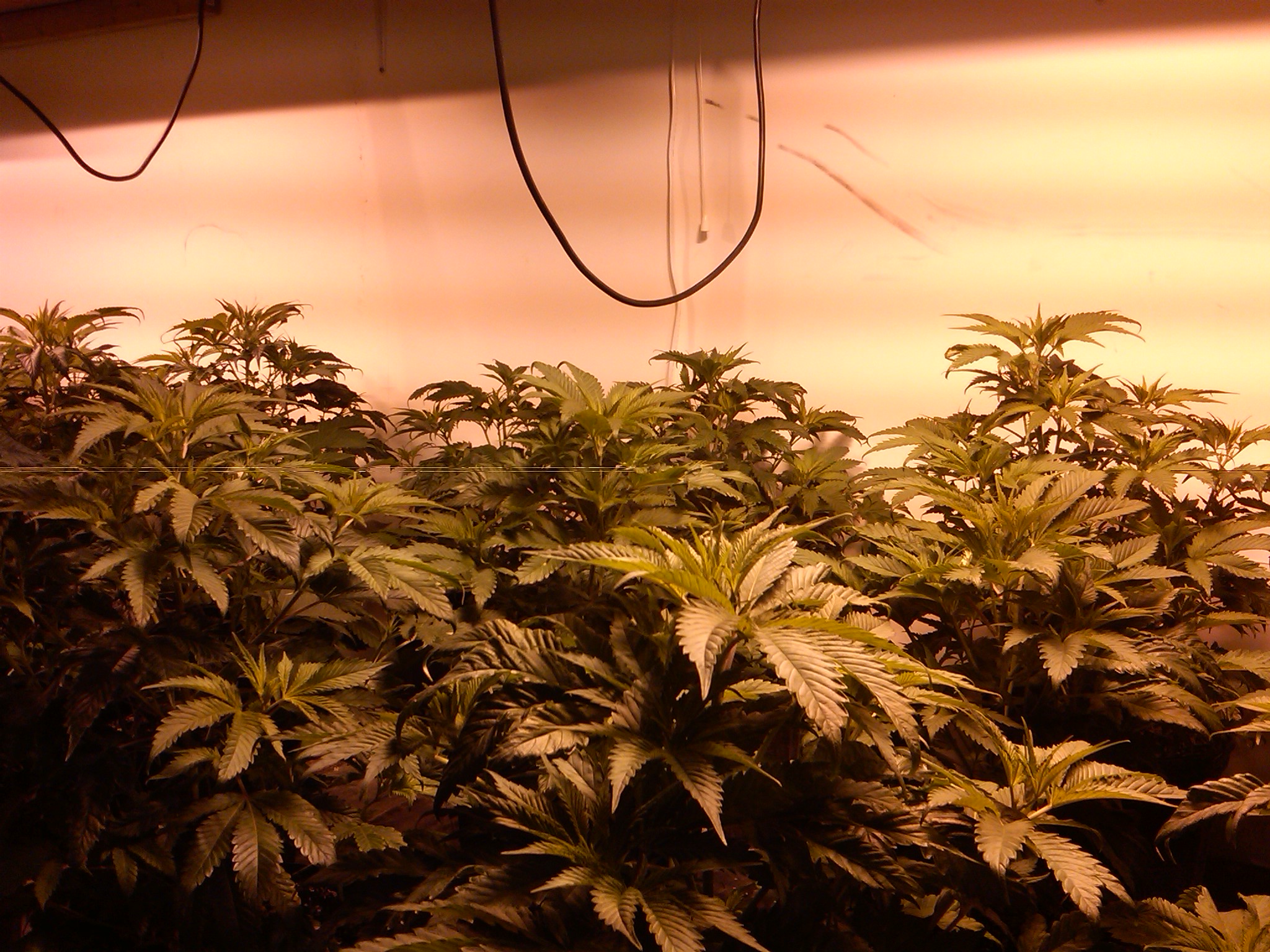
CLOSE-UP VIEW
Assesment
Unlike traditional earthen farming methods in the photos above, hydroponic grow boxes may be large stealth cabinets that produce fresh marijuana, or other herbs and vegetables, in an indoor garden and grow on water, nutrients and grow-lights alone.
Conclusion
Your thoughts and comments on this ME-P are appreciated. Feel free to review our top-left column, and top-right sidebar materials, links, URLs and related websites, too. Then, subscribe to the ME-P. It is fast, free and secure.
Speaker: If you need a moderator or speaker for an upcoming event, Dr. David E. Marcinko; MBA – Publisher-in-Chief of the Medical Executive-Post – is available for seminar or speaking engagements. Contact: MarcinkoAdvisors@msn.com
OUR OTHER PRINT BOOKS AND RELATED INFORMATION SOURCES:
- DICTIONARIES: http://www.springerpub.com/Search/marcinko
- PHYSICIANS: www.MedicalBusinessAdvisors.com
- PRACTICES: www.BusinessofMedicalPractice.com
- HOSPITALS: http://www.crcpress.com/product/isbn/9781466558731
- CLINICS: http://www.crcpress.com/product/isbn/9781439879900
- ADVISORS: www.CertifiedMedicalPlanner.org
- BLOG: www.MedicalExecutivePost.com
- FINANCE:Financial Planning for Physicians and Advisors
- INSURANCE:Risk Management and Insurance Strategies for Physicians and Advisors



Share this:

Filed under: Drugs and Pharma | Tagged: Clandestine Pot House, DEA, home foreclosures, housing crisis, hydroponics, marijuana, marijuana farms, pot, upside down home loans |
 The Leading Business Education Network for Doctors, Financial Advisors and Health Industry Consultants
Adolescent pot use leaves lasting mental deficits
Individuals may lose IQ points later in life if they smoke marijuana before age 18, according to a study that follows a survey showing use of the drug has increased in this age group for four straight years.
http://www.businessweek.com/news/2012-08-27/pot-smoking-teens-may-become-slower-thinking-adults
The research reported in the Proceedings of the National Academy of Sciences found an average decline of eight points on IQ tests done at age 13 and 38 among those who began using marijuana as teenagers. That compared with a slight increase in those who never used it.
Barry
LikeLike
Not in Colorado
Pot stores are booming.
http://www.msn.com/en-us/news/us/colorados-booming-marijuana-industry/vi-BBcRMBl
http://www.msn.com/en-us/news/politics/legal-marijuana-gets-major-test-in-oregon-alaska-and-dc-ballots/ar-BBcW5u4
Jake
LikeLike
Altria’s Untapped $40 Billion Market: Marijuana in the U.S.
Marlboro cigarette maker Altria controls 50.9% of the U.S. cigarette market. The company is still gaining market share; one year ago the company controlled 50.7% of the U.S. cigarette market.
http://www.msn.com/en-us/money/inside-the-ticker/altrias-untapped-dollar40-billion-market-marijuana-in-the-us/ar-BBdwXAM?ocid=iehp
The U.S. cigarette industry is slowly declining as the negative health consequences of smoking become common knowledge.
Chong
LikeLike
Bank of America Merrill Lynch Is High On Marijuana
Put this in your pipeline: Bank of America Merrill Lynch sees massive investment potential in weed. In an in-depth and pun-filled research report, the firm estimated that medical marijuana is currently a $2.9 billion industry that could at least double as more states move towards legalization.
“In our view, scientific, clinical and anecdotal evidence support medicinal cannabis while recent media attention has contributed to public awareness,” the report states. The report examines everything from how marijuana products are produced, used and sold to how drug companies are getting involved to even the chemistry of how pot achieves its effect.
http://wealthmanagement.com/blog/merrill-lynch-high-marijuana
The firm singled out the company GW Pharmaceuticals as being particularly attractive for conducting clinically approved trials of a cannabis based drug for children with epilepsy. Merrill said it’s “bullish on the cannabis testing market,” especially the development of new equipment for testing weed’s quality and potency.
Ann Miller RN MHA
LikeLike
Marijuana Has Downsides
No one should be under the impression that marijuana is harmless. The potential downsides are well known. Nor should anyone be irrationally exuberant about its upsides. It’s not a wonder drug, and the proven benefits are also minimal.
We should be honest about what we do and don’t know. We need more research. It’s true that much of the literature around marijuana focuses on the negative, but that’s “largely due to funding priorities over the last severaldecades,” Dr. Cooper said.
In the report she worked on, only 40 of the 450 pages were about the therapeutic effects of cannabis and cannabinoids, she said, while the other sections were related largely to the negative health outcomes.
She added, “With increased awareness of the clinical potential of cannabinoids, research priorities have shifted to include studying this area” in the last few years.
It’s perfectly natural to be concerned that as cannabis products become legal in more states, they will affect more people.
Many of the experts who have done the work highlighted here are still nervous about how we might proceed. No one thinks that children or adolescents should use marijuana. There’s little regulation right now, and there’s potentialfor the drug to be mixed with other substances to increase its addictive properties. Advertising will probably make claims that will be out of line with reality.
We should be clear about what we’re talking about here, though. Adults will make decisions on how to use it just as they do with similar products like alcohol and tobacco. Both are moredangerous than marijuana, and it’s not even close.
Anecdotes can make compelling cases, but they don’t necessarily lead to thoughtful outcomes.
@aaronecarroll
via Ann Miller RN MHA
LikeLike