





 Support our online development, and advance our onground research initiatives in free market economics, as we seek to showcase the brightest Next-Gen minds.
THE ME-P DISCLAIMER: Posts, comments and opinions do not necessarily represent iMBA, Inc., but become our property after submission. Copyright © 2006 to-date. iMBA, Inc allows colleges, universities, medical and financial professionals and related clinics, hospitals and non-profit healthcare organizations to distribute our proprietary essays, photos, videos, audios and other documents; etc. However, please review copyright and usage information for each individual asset before submission to us, and/or placement on your publication or web site. Attestation references, citations and/or back-links are required. All other assets are property of the individual copyright holder.
Support our online development, and advance our onground research initiatives in free market economics, as we seek to showcase the brightest Next-Gen minds.
THE ME-P DISCLAIMER: Posts, comments and opinions do not necessarily represent iMBA, Inc., but become our property after submission. Copyright © 2006 to-date. iMBA, Inc allows colleges, universities, medical and financial professionals and related clinics, hospitals and non-profit healthcare organizations to distribute our proprietary essays, photos, videos, audios and other documents; etc. However, please review copyright and usage information for each individual asset before submission to us, and/or placement on your publication or web site. Attestation references, citations and/or back-links are required. All other assets are property of the individual copyright holder.


Dollars for Doctors [How Industry Money Reaches Physicians]
Part of a year-end series on major investigations
By Tracy Weber and Charles Ornstein
ProPublica, January 3rd, 2012, 2:55 p.m.
Some of the nation’s top medical schools cracked down on professors who give paid promotional talks for drugmakers last year, and the firms themselves cut back on such spending in the wake of mounting scrutiny.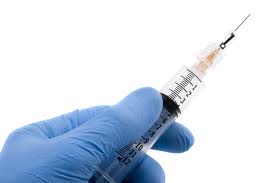
Examples
Last year began with the University of Colorado Denver and its affiliated teaching hospitals launching an overhaul of conflict-of-interest policies [1] after ProPublica found that more than a dozen of its faculty members had given paid promotional talks.
“We’re going to just have to say we’re not going to be involved with these speakers bureaus because they’re primarily marketing,” Dr. Richard Krugman, vice chancellor for health affairs, said in an interview in January 2011.
A few months later, Stanford University took disciplinary action against five faculty members [2] identified by ProPublica who had taken money to deliver drug company speeches, a violation of university policy.
And by last fall, there were indications that pharmaceutical companies were also reducing the money [3] they spent on doctor speakers.
Enter ProPublica
ProPublica first published its Dollars for Docs database [4] in October 2010 listing payments to doctors from seven drug companies. When we updated it this September [3] — with data from five additional companies — spending by some of the firms was down.
Cephalon, a relatively small Pennsylvaniacompany that specializes in pain, cancer and central nervous system drugs, paid physicians nearly $9.3 million in 2009 for speaking and consulting. That figure dropped to $5 million in 2010.
AstraZeneca cut its spending on speakers from roughly $22.8 million in the first half of 2010 to about $9.2 million in the second half. Both companies cited business reasons for the decline.
The Year 2011
Throughout 2011, ProPublica also examined the hefty financial support drug and medical-device makers give to medical societies and health advocacy groups and the impact it has on the groups’ positions.
At the national conference of the Heart Rhythm Society [5] in San Francisco, companies sponsored much of what doctors saw — hotel key cards, bus banners, ads on staircases, even motorcyclists driving mini-billboards in a continuous loop around the Moscone convention center. Nearly 50 percent of the society’s funding in 2010 came from the drug and medical device industry. (We even created a neat interactive graphic [6] that allows you to virtually tour the hotel and exhibit hall.)
The society, which represents doctors who treat abnormal heart rhythms, said its funders don’t influence its positions, but it unveiled a new policy requiring more detailed disclosure of board members’ industry ties.
Then, last month, ProPublica reported about the extensive ties between makers of narcotic painkillers and the American Pain Foundation [7], which bills itself as the nation’s largest organization representing patients afflicted by pain. The foundation received nearly 90 percent of its income in 2010 from drug and device makers and takes positions that closely align with the companies.
Despite a steep rise in overdose deaths tied to the drugs, the foundation has said the risk of addiction to the drugs has been over-hyped and that, if anything, they are underused.
Like the heart society, the pain foundation said its’ funders have no influence on its positions.
Assessment
ProPublica also investigated why physicians were not disciplined or prosecuted [8] after they were accused in federal lawsuits of taking kickbacks from drug or device companies or pushing drugs for unapproved uses. We reviewed lawsuits against 15 drug and device companies that were settled since 2006. None of the more than 75 doctors named as participants in alleged schemes were sanctioned by state medical boards or pursued by prosecutors, ProPublica found.
Last year, dozens of news outlets around the country used our data [9] to localize stories about conflicts of interest in medicine — bringing the discussion to communities large and small.
Link: http://www.propublica.org/article/drug-companies-reduce-payments-to-doctors-as-scrutiny-mounts
Conclusion
Your thoughts and comments on this ME-P are appreciated. Feel free to review our top-left column, and top-right sidebar materials, links, URLs and related websites, too. Then, subscribe to the ME-P. It is fast, free and secure.
Link: http://feeds.feedburner.com/HealthcareFinancialsthePostForcxos
Speaker: If you need a moderator or speaker for an upcoming event, Dr. David E. Marcinko; MBA – Publisher-in-Chief of the Medical Executive-Post – is available for seminar or speaking engagements. Contact: MarcinkoAdvisors@msn.com
OUR OTHER PRINT BOOKS AND RELATED INFORMATION SOURCES:
DICTIONARIES: http://www.springerpub.com/Search/marcinko
PHYSICIANS: www.MedicalBusinessAdvisors.com
PRACTICES: www.BusinessofMedicalPractice.com
HOSPITALS: http://www.crcpress.com/product/isbn/9781466558731
CLINICS: http://www.crcpress.com/product/isbn/9781439879900
BLOG: www.MedicalExecutivePost.com
FINANCE: Financial Planning for Physicians and Advisors
INSURANCE: Risk Management and Insurance Strategies for Physicians and Advisors

Share this:

Filed under: Drugs and Pharma, Ethics | Tagged: AstraZeneca, Cephalon, Charles Ornstein, doctor speakers, Dr. Richard Krugman, Drug Companies Reduce Payments to Doctors as Scrutiny Mounts, ProPublica, Tracy Weber |
 The Leading Business Education Network for Doctors, Financial Advisors and Health Industry Consultants
Determining Your Fee Schedule
What a business charges for its services and products must be enough to cover the costs of making the product, providing the service and running the business and even allowing a profit. One doesn’t need an MBA to comprehend this.
Yet how often does a physician depend on a payer, whether it be Medicare/Medicaid or a commercial health insurer, to determine a physician’s fee schedule? If this is the case, you are cheating yourself.
Does your fee schedule comprehend all the costs of running your practice? Do you understand the real cost of providing your services? Certainly there are many methods of determining the costs of running a medical practice, from fixed, variable to hybrid cost anaylsis methods to much more complex methodologies. Overhead, insurance, theft, labor, supplies are obvious costs that can be calculated using such cost analysis. Different cost analysis methodologies will yield different net costs for the same medical practice even though the inputs for the cost are all from the same source. Using the incorrect cost analysis method for your practice will give you incorrect conclusions on what the true costs of the practice are.
Complicating this frustration are the “hidden costs” of running a medical practice. Consider some of the following hidden costs of running a medical practice.
Staff Hidden Costs:
Lack of motivation
Sick pay
Excessive employee turnover
Grievances
Training and development
Inadequate Staffing or Over Staffing
Costs due to poorly trained staff
Low Productivity
Error Hidden Costs:
Administrative errors
Billing errors
Coding errors
Malpractice costs
Business Management Hidden Costs:
Poor Processes
Inefficient EHR & other systems
High Account Receivables
Low Inventory (Vaccines / Supplies) Turnover
Lack of Mission/Vision
Lack of Proper Equipment
Poor Image in Market Place
Poor Marketing Plan
Frustrated Management/Owner(s)
Perhaps the ultimate hidden cost is lost patients which represents revenue that the medical practice will never have in the future because of a patient’s unpleasant experience which could have been caused by any number of the above hidden costs.
Like any business, the physician practice has a right to set its fees based on the costs incurred in providing physician services together with the costs associated with training, practice experience, qualifications, reputation, value of care given, geographic area, and many other pertinent factors.
After all, a properly set and determined Practice Fee Schedule allows the physician to provide the care he/she was trained to do and stay in business!
David K. Luke, MIM
Physician Financial Advisor
LikeLike
Obama to Require Drug Industry to Disclose Payments to Docs
To head off medical conflicts of interest, the Obama administration is poised to require drug companies to disclose the payments they make to doctors for research, consulting, speaking, travel and entertainment. Many researchers have found evidence that such payments can influence doctors’ treatment decisions and contribute to higher costs by encouraging the use of more expensive drugs and medical devices.
Boyd
LikeLike
Allergan Erases Doctor Payment Records
Drugmaker Allergan removed all but its most recent payments to doctors from its website. But, the ProPublica “Dollars for Docs” database still allows you to see their past payments.
http://www.propublica.org/article/allergan-erases-doctor-payment-records
Denise
LikeLike
MA Governor Backs Easing of Industry Gift Ban
Massachusetts Gov. Deval Patrick said in a letter this week that he will support amendments to the state’s law banning drug and medical-device companies from giving gifts to healthcare providers. Legislation banning gifts to providers was passed in 2008. The Massachusetts Public Health Council later issued related regulations in March 2009.
The changes would allow manufacturers to pay for “modest meals and refreshments” during educational presentations for healthcare providers. In the July 3 letter to two national leaders of the American Medical Student Association’s “PharmFree” campaign, Patrick said companies will now be required to make quarterly reports detailing presentations where meals and refreshments were served, and the total cost for manufacturers.
Source: Jaimy Lee, Modern Healthcare [7/6/12]
LikeLike
Dollars for Docs Mints a Millionaire
An article by Tracy Weber & Charles Ornstein with new data show drugmakers’ payments to hundreds of thousands of doctors, and some have made well over $500,000.
http://www.propublica.org/article/dollars-for-docs-mints-a-millionaire
Dollars for Docs Update
And, an essay by Jeremy B. Merrill, Charles Ornstein, Tracy Weber, Sisi Wei and Dan Nguyen suggests that a state wide database now features more than $2 billion in payments from 15 pharmaceutical companies representing 47% of the market.
http://projects.propublica.org/docdollars/
Joyce
LikeLike
Dear ProPublica and [ME-P] readers,
As I hope you’ve seen, we’ve updated and relaunched our “Dollars for Docs” database above, charting pharma company payments to doctors and others to promote the sale of prescription drugs. I want to take a moment now to ask you to support ProPublica in this and other important work.
Dollars for Docs first launched in late 2010. Since then, the database has received well over four million page views, many from consumers seeking information about the practices of their own physicians. Beyond that, ProPublica has published more than 40 stories on this subject-and our data has made it possible for more than 130 different news organizations from all around the country to report on how this issue is playing out in their area-probably in yours.
Most important, this coverage has made a difference. Such payments have been limited by medical schools including Stanford, the Universities of Colorado, Pennsylvania and Virginia, the Medical College of Georgia and Oregon Health & Science University. The Affordable Care Act will mandate such disclosure next year, and Dollars for Docs is being held out as a model for the forthcoming federal system.
All of this costs money-a lot of it. We estimate that ProPublica has spent more than $600,000 on Dollars for Docs.
If you find this sort of innovative use of data and ground-breaking reporting valuable, we hope you’ll contribute today.
You can do so by clicking here: https://www.propublica.org/donate/give_split/diff_np/
Thanks in advance for your support.
Richard J. Tofel
President, ProPublica
LikeLike
GlaxoSmithKline to Quit Paying Doctors for Promotional Talks
It is about time.
The sixth-largest drug maker has been cutting back on paid speaking, ProPublica’s Dollars for Docs database shows.
http://www.propublica.org/article/glaxosmithkline-to-quit-paying-doctors-for-promotional-talks?utm_source=et&utm_medium=email&utm_campaign=dailynewsletter
Dr. Barton
LikeLike
Are you ready for the Sunshine Act reveal?
Once the Sep. 30 deadline comes, doctors will no longer be able to contest data reported about their dealings with pharma or medical device companies.
http://www.medicalpracticeinsider.com/news/27-days-out-are-you-ready-sunshine-act-reveal?email=MARCINKOADVISORS@MSN.COM&GroupID=90115
This three-step process guides you through reviewing and, if need be, disputing that information.
Hope R. Hetico RN MHA
LikeLike
The War on Doctors?
The media has feasted on the recent release of data by the Center for Medicare and Medicaid Services (CMS) that details payments made by the pharmaceutical and device companies to hospitals and physicians in 2013.
http://www.kevinmd.com/blog/2014/10/sunshine-act-escalates-war-physicians.html
This was part of the the Physician Payments Sunshine Act (PPSA) — also known as section 6002 of the Affordable Care Act (ACA) of 2010.
Liddle
LikeLike
The 10 drugs for which companies spent the most in payments to physicians in 2015
1. Xarelto ($28.4 Million)
2. Humira ($24.9 Million)
3. Invokana ($20.9 Million)
4. Viekira ($19.2 Million)
5. Eliquis ($18.8 Million)
6. Bydureon ($18.5 Million)
7. Androgel ($15.3 Million)
8. Synthroid ($14.7 Million)
9. Lupron ($14.3 Million)Victoza ($11.9 Million)
10. Victoza ($11.9 Million)
Source: Pro Publica
http://www.BusinessofMedicalPractice.com
LikeLike
Dollars for Docs – Update
Via Mike Tigas, Ryann Grochowski Jones, Charles Ornstein, and Lena Groeger,ProPublica. Updated June 28, 2018
Pharmaceutical and medical device companies are required by law to release details of their payments to a variety of doctors and U.S. teaching hospitals for promotional talks, research and consulting, among other categories.
Use this tool to search for general payments (excluding research and ownership interests) made from August 2013 to December 2016.
https://projects.propublica.org/docdollars/
Dr. David Marcinko MBA
LikeLike