





 Support our online development, and advance our onground research initiatives in free market economics, as we seek to showcase the brightest Next-Gen minds.
THE ME-P DISCLAIMER: Posts, comments and opinions do not necessarily represent iMBA, Inc., but become our property after submission. Copyright © 2006 to-date. iMBA, Inc allows colleges, universities, medical and financial professionals and related clinics, hospitals and non-profit healthcare organizations to distribute our proprietary essays, photos, videos, audios and other documents; etc. However, please review copyright and usage information for each individual asset before submission to us, and/or placement on your publication or web site. Attestation references, citations and/or back-links are required. All other assets are property of the individual copyright holder.
Support our online development, and advance our onground research initiatives in free market economics, as we seek to showcase the brightest Next-Gen minds.
THE ME-P DISCLAIMER: Posts, comments and opinions do not necessarily represent iMBA, Inc., but become our property after submission. Copyright © 2006 to-date. iMBA, Inc allows colleges, universities, medical and financial professionals and related clinics, hospitals and non-profit healthcare organizations to distribute our proprietary essays, photos, videos, audios and other documents; etc. However, please review copyright and usage information for each individual asset before submission to us, and/or placement on your publication or web site. Attestation references, citations and/or back-links are required. All other assets are property of the individual copyright holder.


Leadership Concepts for Physicians and Healthcare CXOs
By Dr. David Edward Marcinko MBA
[Editor-in-Chief]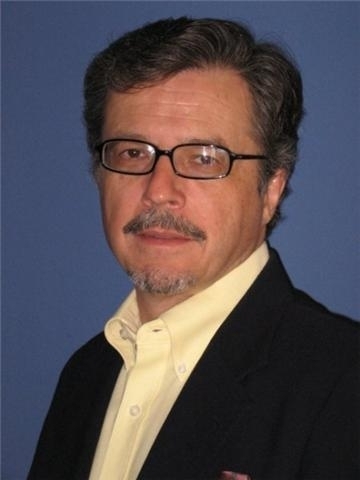
The toughest part of implementing any medical quality improvement program is changing the healthcare organization’s culture. The physician-executive or chief executive officer must be committed to change, not just give lip service to it. The core to TQM or, for that matter, any of the several new popular quality programs, like six-sigma, is the buy-in of senior management to change the culture of the practice organization to support the individual’s pursuit of quality.
Re-Frame the Situation
The cultural change requires a complete reorientation of job descriptions and duties. It requires a collaborative rather than an adversarial work force. The phrase, “it’s not my job,” cannot work in a quality healthcare environment. Medical quality programs cannot work where employees refuse to be “their brothers’ keepers.” This collaborative working system is difficult to implement, but not impossible to achieve. It involves certain basic changes to the traditional American work ethic of “rugged individualism.” It suggests that the individual employee must become a partner in the healthcare enterprise and be just as concerned about quality as the CEO. Quality really does become everybody’s business.
Assessment
Quality requires new thinking about the relationships that have traditionally existed between labor [nurses, therapists, assistants, and aides, etc] and management [physician-owner, CEO, clinic administrator, managers, etc]. It requires a new direction; a new partnership must be forged between management and the clinical floor, between management and administrative staff, and between line and staff management.
Conclusion
Your thoughts and comments on this ME-P are appreciated. Feel free to review our top-left column, and top-right sidebar materials, links, URLs and related websites, too. Then, subscribe to the ME-P. It is fast, free and secure.
Link: http://feeds.feedburner.com/HealthcareFinancialsthePostForcxos
Speaker: If you need a moderator or speaker for an upcoming event, Dr. David E. Marcinko; MBA – Publisher-in-Chief of the Medical Executive-Post – is available for seminar or speaking engagements. Contact: MarcinkoAdvisors@msn.com
OUR OTHER PRINT BOOKS AND RELATED INFORMATION SOURCES:
DICTIONARIES: http://www.springerpub.com/Search/marcinko
PHYSICIANS: www.MedicalBusinessAdvisors.com
PRACTICES: www.BusinessofMedicalPractice.com
HOSPITALS: http://www.crcpress.com/product/isbn/9781466558731
CLINICS: http://www.crcpress.com/product/isbn/9781439879900
BLOG: www.MedicalExecutivePost.com
FINANCE: Financial Planning for Physicians and Advisors
INSURANCE: Risk Management and Insurance Strategies for Physicians and Advisors



Share this:

Filed under: "Doctors Only", Career Development, Ethics, Practice Management, Quality Initiatives | Tagged: corporate culture, leadership, medical culture, medical quality improvement, organizational behavior |
 The Leading Business Education Network for Doctors, Financial Advisors and Health Industry Consultants
Revamped Informed Consent Puts the Patient at the Center
With the cultural change call for more patient-centered, transparent health care, a number of outdated hospital processes are getting a facelift. Informed consent, in particular, has come under scrutiny, as shared decision-making between provider and patient gains greater importance.
“It is time for a fundamental rethinking around informed consent, but there are few incentives to improve it,” contends Harlan Krumholz MD, professor of medicine, epidemiology and public health at Yale University and author of “Informed Consent to Promote Patient-Centered Care,” which appeared in the March 2010 issue of the Journal of the American Medical Association [JAMA].
“Patients are signing documents on a gurney, or minutes away from sedation, and are hardly in the frame of mind to sign. Often, they’re choosing procedures they would not if they truly understood what they were getting into.”
http://www.hhnmag.com/hhnmag_app/jsp/articledisplay.jsp?dcrpath=HHNMAG/Article/data/07JUL2010/1007HHN_Inbox_patientcare&domain=HHNMAG
Source: Tracy Granzyk Wetzel
I could not agree more.
Hope Hetico RN, MHA
[Managing Editor]
LikeLike
More on Mystery Doctor Shoppers
http://www.chicagotribune.com/health/ct-met-mystery-patient-20100719,0,2581267.story
Read it … and be chilled.
Marion
LikeLike
Looking at the Man / Woman in the Mirror
[A View from the Other Side of the Hospital Bed]
Those in healthcare rarely see life through the patient’s or family’s eyes. Yet there is much to learn from first-hand experience as patients or their families.
When we do experience our healthcare system up front and personal, we walk away with an experience that can change us forever. Read one personal example of this cultural change here:
http://www.hospitalimpact.org/index.php/2010/08/04/revelations_the_view_from_the_other_side_1
Donna
LikeLike
Hospital Merger Culture
In an excerpt from Hospital Mergers—Why They Work, Why They Don’t, a new book from AHA Press, the author compares the approaches of two health systems during merger formation. Their experiences demonstrate the power of cultural differences to make or break a merger.
http://www.hhnmag.com/hhnmag_app/jsp/articledisplay.jsp?dcrpath=HHNMAG/Article/data/08AUG2010/081610HHN_Weekly_Scanlan&domain=HHNMAG
Kirk
LikeLike
Emerging Healthcare Organizations:
[Accountable Care Organizations]
According to Robert James Cimasi MHA CMP™ of http://www.HealthCapital.com, the new healthcare reform legislation has proposed the implementations of Accountable Care Organizations (ACOs) as a way to increase efficiency and value, and decreasing the cost of delivering healthcare services.
While the success of implementing an ACO model is yet uncertain, and procedural and legal issues must be resolved, early pilot operations appear to have given some insight into the potential benefit that ACOs could have on the healthcare system.
Click to access ACO.pdf
Hopefully, this will encourage a more patient centric care model.
Ann Miller RN, MHA
LikeLike
Medical errors and the movement toward transparency
David Mayer, M.D., co-producer of the award-winning film, “The Faces of Medical Error – From Tears to Transparency: The Story of Lewis Blackman,” spoke to Chicago’s AHCJ chapter this week about the growing movement of transparency in health care.
Mayer described changing the culture of “deny and defend” in hospitals to a culture free of “shame and blame,” in which health care providers acknowledge mistakes that are made. In such efforts, providers are encouraged to learn from mistakes and they explain the errors that do harm to patients and their families.
Mayer, a leader on transparency in health care, is associate dean for the University of Illinois at Chicago College of Medicine, co-executive director for UIC’s Institute for Patient Safety Excellence and a practicing anesthesiologist.
http://www.healthjournalism.org/resources-articles.php
Graham
LikeLike
Nurses Silent on Doctor Errors?
Culture … Schmulture!
According to a new study, more than 80% of nurses observe physicians and other clinicians taking shortcuts, such as not washing their hands long enough, exhibiting incompetence, and demonstrating disrespect that shuts down lines of communication.
Click to access the-silent-treatment.pdf
At the same time, the study highlights ways in which nurses can bring up and resolve such knotty issues – dubbed “undiscussables” – with the help of physicians who create a climate of openness.
Katherine
LikeLike
Payments to CEO Raise New Conflicts at Top Health Quality Group
The National Quality Forum says it approved allowing Dr. Christine Cassel collect six-figure compensation to serve on the boards of health care companies affected by the group’s work.
http://www.propublica.org/article/payments-to-ceo-raise-new-conflicts-at-top-health-quality-group?utm_source=et&utm_medium=email&utm_campaign=dailynewsletter
Say what?
Ann Miller RN MHA
LikeLike