







 Support our online development, and advance our onground research initiatives in free market economics, as we seek to showcase the brightest Next-Gen minds.
THE ME-P DISCLAIMER: Posts, comments and opinions do not necessarily represent iMBA, Inc., but become our property after submission. Copyright © 2006 to-date. iMBA, Inc allows colleges, universities, medical and financial professionals and related clinics, hospitals and non-profit healthcare organizations to distribute our proprietary essays, photos, videos, audios and other documents; etc. However, please review copyright and usage information for each individual asset before submission to us, and/or placement on your publication or web site. Attestation references, citations and/or back-links are required. All other assets are property of the individual copyright holder.
Support our online development, and advance our onground research initiatives in free market economics, as we seek to showcase the brightest Next-Gen minds.
THE ME-P DISCLAIMER: Posts, comments and opinions do not necessarily represent iMBA, Inc., but become our property after submission. Copyright © 2006 to-date. iMBA, Inc allows colleges, universities, medical and financial professionals and related clinics, hospitals and non-profit healthcare organizations to distribute our proprietary essays, photos, videos, audios and other documents; etc. However, please review copyright and usage information for each individual asset before submission to us, and/or placement on your publication or web site. Attestation references, citations and/or back-links are required. All other assets are property of the individual copyright holder.


[By Staff Reporters]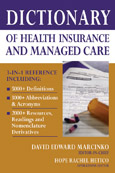
According to Associate Professor Gregory O. Ginn; PhD, MBA, CPA, MEd., of the University of Las Vegas, the term “alternative medicine” refers to alternatives to Western medicine, such as herbal medicine or acupuncture.
Definition
According to Dictionary of Health Insurance & Managed Care the term “complementary medicine” refers to the use of alternative medicine as supportive therapy in conjunction with traditional medicine. The use of alternative or complementary medicine cannot be dismissed as a fad and is already accounting for a significant volume of healthcare business. Complementary medicine is being accepted as adjunctive therapy to make patients feel better.
Assessment
Of course, greater flexibility will be required in all aspects of healthcare organizations to accommodate different modalities of treatment and thereby increase market share and revenues.
Conclusion
Your thoughts and comments on this ME-P are appreciated. Feel free to review our top-left column, and top-right sidebar materials, links, URLs and related websites, too. Then, subscribe to the ME-P. It is fast, free and secure.
Speaker: If you need a moderator or speaker for an upcoming event, Dr. David E. Marcinko; MBA – Publisher-in-Chief of the Medical Executive-Post – is available for seminar or speaking engagements. Contact: MarcinkoAdvisors@msn.com
OUR OTHER PRINT BOOKS AND RELATED INFORMATION SOURCES:
- PRACTICES: www.BusinessofMedicalPractice.com
- HOSPITALS: http://www.crcpress.com/product/isbn/9781466558731
- CLINICS: http://www.crcpress.com/product/isbn/9781439879900
- ADVISORS: www.CertifiedMedicalPlanner.org
- FINANCE: Financial Planning for Physicians and Advisors
- INSURANCE: Risk Management and Insurance Strategies for Physicians and Advisors
- Dictionary of Health Economics and Finance
- Dictionary of Health Information Technology and Security
- Dictionary of Health Insurance and Managed Care


Share this:

Filed under: Career Development, Managed Care, Practice Management | Tagged: alternate medicine, complimentary medicine |


No one cares about alternative medicine
For another opinion:
http://scienceblogs.com/aetiology/2006/10/failure_of_alternative_med.php
Gerald
LikeLike
I admire your writing and the way you explain things like alternative medicine in your dictionary. Some of the post comments are insightful, too.
Max
LikeLike
Alternatives Rising!
As you know, once relegated to the margins of the medical world, alternative remedies and therapies are now increasingly finding a place in many American homes, with more than a third of adults saying they have used some form of them. But, it’s not just the general public.
In a new occasional series, The New York Times will talk to doctors around the country to find out what nontraditional medicines or therapies they sometimes recommend or use themselves.
http://well.blogs.nytimes.com/2011/10/19/the-doctors-remedy-turmeric-for-joint-pain/?ref=health
What do you a think of that?
Beatrice
LikeLike
Hospitals Embrace CAM in an Era of ‘Whole Person’ Health
In an era where many hospitals include community health and “whole person” health in their mission statements, complementary and alternative medicine is a natural fit. And, research suggests that an increasing number of hospitals offer some version of CAM services to patients.
http://www.hhnmag.com/hhnmag/HHNDaily/HHNDailyDisplay.dhtml?id=180007602
Any thoughts. Is this like alternative investments, FAs?
Hope Rachel Hetico RN MHA
LikeLike
Complementary and Alternative Medicine In the VA
According to Sita Ananth and Leila Kozak, the VA’s experiences with complementary and alternative medicine have important lessons for community hospitals, from successful mind-body interventions to the integration of chiropractic care into the conventional care of veteran patients.
http://www.hhnmag.com/hhnmag/HHNDaily/HHNDailyDisplay.dhtml?id=6120007952
Beatrice
LikeLike
CAM UPDATE on America’s Main Streets
Rural hospitals have unique challenges in implementing integrative health strategies.
http://www.hhnmag.com/hhnmag/HHNDaily/HHNDailyDisplay.dhtml?id=2350001399
But, with creativity and support of the local community, these hospitals can become true centers of healing.
Virginia
LikeLike
Choosing Alternative Medicine
An interesting article by James Salwitz MD.
http://thehealthcareblog.com/blog/2013/02/13/choosing-alternative-medicine/
Jamison
LikeLike
Homeopathy under scrutiny
What is homeopathy?
Homeopathy is a medical philosophy that essentially believes your body is the best weapon to fight disease. Homeopathic medicine is based on the idea that “like cures like,” meaning if something causes a symptom in your body, if you take a diluted form, it will boost your body’s ability to fight it. Typically these remedies include a plant or a mineral in a tiny amount.
But…
An analysis of hundreds of published studies from the National Health and Medical Research Council in Australia found that homeopathic medicine was no more effective than a placebo. There is no evidence that they actually work, the council claimed, and yet it is a multibillion dollar business.
This led to:
The Food and Drug Administration (FDA) [just finished] a public hearing to obtain information and comments from stakeholders about the current use of human drug and biological products labeled as homeopathic, as well as the Agency’s regulatory framework for such products. These products include prescription drugs and biological products labeled as homeopathic and over-the-counter (OTC) drugs labeled as homeopathic. FDA is seeking participants for the public hearing and written comments from all interested parties, including, but not limited to, consumers, patients, caregivers, health care professionals, patient groups, and industry. FDA is seeking input on a number of specific questions, but is interested in any other pertinent information participants would like to share.
This is probably because of stuff like this:
Here’s the thing. I don’t get why there’s such a distinction between “alternative” and “traditional” medicine. I make no such differentiations. To me, there’s only the medicine which we subject to scrutiny and the medicine we don’t. This blog is FULL of posts attacking “traditional” medicine when it fails to work as promised. There are also posts on “alternative” therapies that have been studied, and do work. Those should be used.
It sometimes feels like people who use “alternative” medicine oppose its study, or don’t care about results. If that’s the case, then – yes – I can’t say I’m all for that. When something fails to show benefits over harms in research, then I tend to frown upon its use. But anything that succeeds on this metric should no longer be considered “alternative” medicine.
http://theincidentaleconomist.com/wordpress/homeopathy-under-scrutiny/
It’s just medicine.
Aarone Carroll MD
via Ann Miller RN MHA
LikeLike