







 Support our online development, and advance our onground research initiatives in free market economics, as we seek to showcase the brightest Next-Gen minds.
THE ME-P DISCLAIMER: Posts, comments and opinions do not necessarily represent iMBA, Inc., but become our property after submission. Copyright © 2006 to-date. iMBA, Inc allows colleges, universities, medical and financial professionals and related clinics, hospitals and non-profit healthcare organizations to distribute our proprietary essays, photos, videos, audios and other documents; etc. However, please review copyright and usage information for each individual asset before submission to us, and/or placement on your publication or web site. Attestation references, citations and/or back-links are required. All other assets are property of the individual copyright holder.
Support our online development, and advance our onground research initiatives in free market economics, as we seek to showcase the brightest Next-Gen minds.
THE ME-P DISCLAIMER: Posts, comments and opinions do not necessarily represent iMBA, Inc., but become our property after submission. Copyright © 2006 to-date. iMBA, Inc allows colleges, universities, medical and financial professionals and related clinics, hospitals and non-profit healthcare organizations to distribute our proprietary essays, photos, videos, audios and other documents; etc. However, please review copyright and usage information for each individual asset before submission to us, and/or placement on your publication or web site. Attestation references, citations and/or back-links are required. All other assets are property of the individual copyright holder.


Understanding Physician Estate Planning
By Lawrence E. Howes; CFP™
By Joel B. Javer; CFP™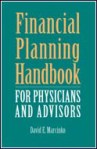
Suppose you are a physician or other individual who own a farm that for many years was located well outside the city limits of a growing community, and now the farm is in the path of this growth?
The dynamics of determining the fair market value of your farm have changed. You might be inclined to value it as a farm and your estate would make the argument that it is a farm.
“Highest and Best Use”
The IRS would argue the property should be valued at its highest and best use. Unfortunately for your estate the “highest and best use” might be as a mega mall, apartment buildings, or a high-rise office building.
All considerably more valuable than the farm might be worth.
Enter Internal Revenue Code Section §2032A
Valuation of a property at the highest and best use might force the survivors to sell the land to pay a large estate tax.
On the other hand, valuation at its present use might enable the survivors to carry on the farm business.
IRC Section 2032A permits qualifying estates to value at least a portion of the real property at its “qualified use.” The section applies to farms or other trades or businesses.
Major Requirements
Five major requirements and conditions must be satisfied. Ultimately, the maximum amount by which the value of the special use real estate can be reduced is $800,000 – or other amount indexed for inflation – after Y2000.
Assessment
While this is not an insignificant amount, if there is a large disparity between “highest and best use” and present use value, then planning to avoid the potential liquidity deficit is imperative.
Conclusion
Please opine and comment if you have ever considered or used this strategy; and what was the result?
Book info: http://www.jbpub.com/catalog/0763745790/
Linguistics: www.HealthDictionarySeries.com
Related: http://www.aicpa.org/PUBS/jofa/jan98/sbtaxsol.htm
Share this:

Filed under: Estate Planning | Tagged: Estate Planning | Leave a comment »


 The Leading Business Education Network for Doctors, Financial Advisors and Health Industry Consultants