ME-P SYNDICATIONS:
WSJ.com,
CNN.com,
Forbes.com,
WashingtonPost.com,
BusinessWeek.com,
USNews.com, Reuters.com,
TimeWarnerCable.com,
e-How.com,
News Alloy.com,
and Congress.org


BOARD CERTIFICATION EXAM STUDY GUIDES
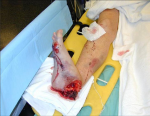
Lower Extremity Trauma
[Click on Image to Enlarge]
The “Medical Executive-Post” is about connecting doctors, health care executives and modern consulting advisors. It’s about free-enterprise, business, practice, policy, personal financial planning and wealth building capitalism. We have an attitude that’s independent, outspoken, intelligent and so Next-Gen; often edgy, usually controversial. And, our consultants “got fly”, just like U. Read it! Write it! Post it! “Medical Executive-Post”. Call or email us for your FREE advertising and sales consultation TODAY [678.779.8597] Email: MarcinkoAdvisors@outlook.com



ePodiatryConsentForms.com
Suite #5901 Wilbanks Drive, Norcross, Georgia, 30092 USA [1.678.779.8597]. Our location is real and we are now virtually enabled to assist new long distance clients and out-of-town colleagues.
If you want the opportunity to work with leading health care industry insiders, innovators and watchers, the “ME-P” may be right for you? We are unbiased and operate at the nexus of theoretical and applied R&D. Collaborate with us and you’ll put your brand in front of a smart & tightly focused demographic; one at the forefront of our emerging healthcare free marketplace of informed and professional “movers and shakers.” Our Ad Rate Card is available upon request [678-779-8597].

“Providing Management, Financial and Business Solutions for Modernity”
Whether you’re a mature CXO, physician or start-up entrepreneur in need of management, financial, HR or business planning information on free markets and competition, the "Medical Executive-Post” is the online place to meet for Capitalism 2.0 collaboration.

Support our online development, and advance our onground research initiatives in free market economics, as we seek to showcase the brightest Next-Gen minds.
THE ME-P DISCLAIMER: Posts, comments and opinions do not necessarily represent iMBA, Inc., but become our property after submission. Copyright © 2006 to-date. iMBA, Inc allows colleges, universities, medical and financial professionals and related clinics, hospitals and non-profit healthcare organizations to distribute our proprietary essays, photos, videos, audios and other documents; etc. However, please review copyright and usage information for each individual asset before submission to us, and/or placement on your publication or web site. Attestation references, citations and/or back-links are required. All other assets are property of the individual copyright holder.





 ***
***


 The Leading Business Education Network for Doctors, Financial Advisors and Health Industry Consultants
Enrollment Would Grow By 8 Million if States Expanded Medicaid
The Robert Wood Johnson Foundation recently released an updated analysis of the impact Medicaid expansion would have in states that have not expanded eligibility. Here are some key findings from the report:
• Medicaid enrollment would grow by 8-9 million from 2018 through 2027.
• Higher caseloads would increase state Medicaid spending by $82.5-$90.8 billion.
• Caseload growth would increase federal funding by $595.8-$664.8 billion.
• Federal subsidies in marketplaces would fall by $132.2-$133.2 billion.
• Reductions in uncompensated care would save states $22.5-$27.9 billion.
• Federal spending on uncompensated care would drop by $36.1-$44.6 billion.
Source: Robert Wood Johnson Foundation, April 2017
LikeLike
Six Medicaid Policy Recommendations from Two Past CMS Administrators
1. Make Medicaid a more outcomes-based program
2. Improve Medicaid financing
3. Ensure proper access to care
4. Invest in a data, technology, and analytics infrastructure
5. Coordinate programs for dual-eligible beneficiaries (who qualify for both Medicaid and Medicare) and other populations
6. Reduce administrative burden on states and allowing for more rapid innovation
Source: JAMA Forum
LikeLike
Newly Enrolled Medicaid Families Saved $3,000 on Average Annually
The Commonwealth Fund recently released an analysis of healthcare spending for low-income families in states that expanded Medicaid compared to those in non-expansion states. Here are some key findings from the report:
• Low-income families in expansion states saved $382 in annual healthcare spending.
• In 2014, 30 states and DC participated in Medicaid expansion, 20 states did not.
• Low-income families in expansion states were 11% less likely to have any spending.
• Those with premiums spent about $379 less in expansion vs. nonexpansion states.
• In expansion states, the highest level of spending among families fell by $1,500.
• The average newly enrolled Medicaid family saved at least $3,000 annually.
Source: Commonwealth Fund, August 22, 2017
LikeLike
Medicaid Rates in 44 States to Rise in Fiscal Year 2018
Although Medicaid’s future path remains uncertain, most states plan to raise their provider rates for their programs this fiscal year, according to a Kaiser Family Foundation survey of state directors.
In fiscal year 2018, 44 states plan to or have already implemented a rate increase for at least one provider type, such as inpatient and outpatient hospitals, primary care physicians, specialists, dentists, or nursing homes.
This is the second fiscal year in a row where the majority of states are handing raises rather than rate cuts. The trend is one of the reasons that state Medicaid spending increased 3.5% between fiscal years 2016 and 2017.
Source: Virgil Dickson, Modern Healthcare [10/20/17]
LikeLike