ME-P SYNDICATIONS:
WSJ.com,
CNN.com,
Forbes.com,
WashingtonPost.com,
BusinessWeek.com,
USNews.com, Reuters.com,
TimeWarnerCable.com,
e-How.com,
News Alloy.com,
and Congress.org



BOARD CERTIFICATION EXAM STUDY GUIDES
Lower Extremity Trauma
[Click on Image to Enlarge]
The “Medical Executive-Post” is about connecting doctors, health care executives and modern consulting advisors. It’s about free-enterprise, business, practice, policy, personal financial planning and wealth building capitalism. We have an attitude that’s independent, outspoken, intelligent and so Next-Gen; often edgy, usually controversial. And, our consultants “got fly”, just like U. Read it! Write it! Post it! “Medical Executive-Post”. Call or email us for your FREE advertising and sales consultation TODAY [678.779.8597] Email: MarcinkoAdvisors@outlook.com



ePodiatryConsentForms.com
Suite #5901 Wilbanks Drive, Norcross, Georgia, 30092 USA [1.678.779.8597]. Our location is real and we are now virtually enabled to assist new long distance clients and out-of-town colleagues.
If you want the opportunity to work with leading health care industry insiders, innovators and watchers, the “ME-P” may be right for you? We are unbiased and operate at the nexus of theoretical and applied R&D. Collaborate with us and you’ll put your brand in front of a smart & tightly focused demographic; one at the forefront of our emerging healthcare free marketplace of informed and professional “movers and shakers.” Our Ad Rate Card is available upon request [678-779-8597].

“Providing Management, Financial and Business Solutions for Modernity”
Whether you’re a mature CXO, physician or start-up entrepreneur in need of management, financial, HR or business planning information on free markets and competition, the "Medical Executive-Post” is the online place to meet for Capitalism 2.0 collaboration.

Support our online development, and advance our onground research initiatives in free market economics, as we seek to showcase the brightest Next-Gen minds.
THE ME-P DISCLAIMER: Posts, comments and opinions do not necessarily represent iMBA, Inc., but become our property after submission. Copyright © 2006 to-date. iMBA, Inc allows colleges, universities, medical and financial professionals and related clinics, hospitals and non-profit healthcare organizations to distribute our proprietary essays, photos, videos, audios and other documents; etc. However, please review copyright and usage information for each individual asset before submission to us, and/or placement on your publication or web site. Attestation references, citations and/or back-links are required. All other assets are property of the individual copyright holder.






 The Leading Business Education Network for Doctors, Financial Advisors and Health Industry Consultants
Disparities
Did you know that Richard Florida over at CityLab mapped various measures of inequality across the United States. His point is that “America’s economic divide registers in what we can afford to buy, the education we have the opportunity to attain and, most basically, how much time we have to live.”
http://www.citylab.com/work/2015/04/the-geography-of-well-being/391188/?utm_source=SFTwitter&nl=upshot&em_pos=large&emc=edit_up_20150424
NPR’s Planet Money showed the rise and fall in inequality in the United States in two graphics. Its point: It’s different now. The Washington Post republished it and improved upon it.
http://www.npr.org/blogs/money/2015/02/11/384988128/the-fall-and-rise-of-u-s-inequality-in-2-graphs?nl=upshot&em_pos=large&emc=edit_up_20150424
And, The Atlantic looked at usage differences across international borders. Wonkblog chose to focus on what emoji use says about each country and its language.
http://knowmore.washingtonpost.com/2015/04/20/the-history-of-american-inequality-in-1-fascinating-chart/?nl=upshot&em_pos=large&emc=edit_up_20150424
Damon Darlin
LikeLike
Disparity
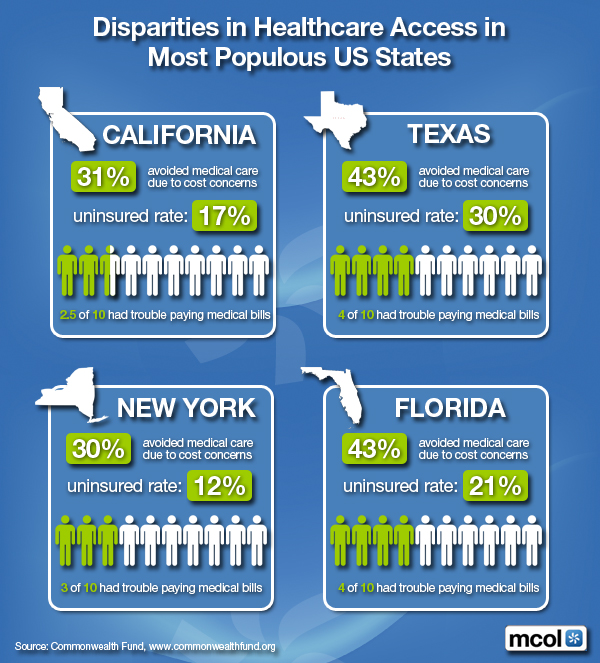
With rising income, and healthcare access, inequality in the United States, you might expect more and more people to conclude that it’s time to soak the rich. Here’s a puzzle, though: Over the last several decades, close to the opposite has happened.
Since the 1970s, middle-class incomes have been stagnant in inflation-adjusted terms, while the wealthy have done very well; inequality of wealth and income has risen.
Over that same period, though, Americans’ views on whether the government should work to redistribute income — to tax the rich, for example, and funnel the proceeds to the poor and working class — have, depending on which survey answers you look at, either been little changed, or shifted toward greater skepticism about redistribution.
In other words, Americans’ desire to soak the rich has diminished even as the rich have more wealth available that could, theoretically, be soaked.
BARZILLAY
LikeLike