






 Support our online development, and advance our onground research initiatives in free market economics, as we seek to showcase the brightest Next-Gen minds.
THE ME-P DISCLAIMER: Posts, comments and opinions do not necessarily represent iMBA, Inc., but become our property after submission. Copyright © 2006 to-date. iMBA, Inc allows colleges, universities, medical and financial professionals and related clinics, hospitals and non-profit healthcare organizations to distribute our proprietary essays, photos, videos, audios and other documents; etc. However, please review copyright and usage information for each individual asset before submission to us, and/or placement on your publication or web site. Attestation references, citations and/or back-links are required. All other assets are property of the individual copyright holder.
Support our online development, and advance our onground research initiatives in free market economics, as we seek to showcase the brightest Next-Gen minds.
THE ME-P DISCLAIMER: Posts, comments and opinions do not necessarily represent iMBA, Inc., but become our property after submission. Copyright © 2006 to-date. iMBA, Inc allows colleges, universities, medical and financial professionals and related clinics, hospitals and non-profit healthcare organizations to distribute our proprietary essays, photos, videos, audios and other documents; etc. However, please review copyright and usage information for each individual asset before submission to us, and/or placement on your publication or web site. Attestation references, citations and/or back-links are required. All other assets are property of the individual copyright holder.


Boom or Bust?

[By Edward Bukstel]
ME-P SPECIAL REPORT
***
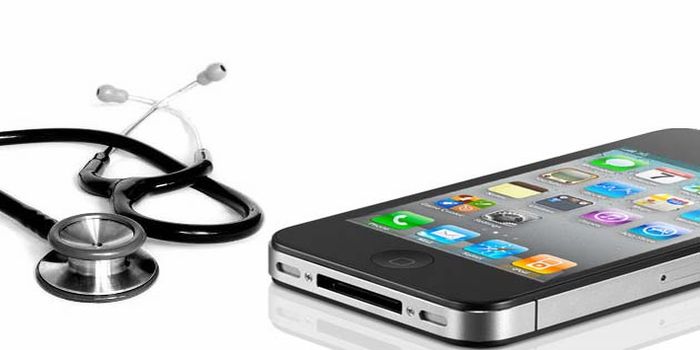
mHealth or Global Economy, Boom or Bust?
***
***
Channel Surfing the ME-P
Have you visited our other topic channels? Established to facilitate idea exchange and link our community together, the value of these topics is dependent upon your input. Please take a minute to visit. And, to prevent that annoying spam, we ask that you register. It is fast, free and secure.
Conclusion
Your thoughts and comments on this ME-P are appreciated. Feel free to review our top-left column, and top-right sidebar materials, links, URLs and related websites, too. Then, subscribe to the ME-P. It is fast, free and secure.
Speaker: If you need a moderator or speaker for an upcoming event, Dr. David E. Marcinko; MBA – Publisher-in-Chief of the Medical Executive-Post – is available for seminar or speaking engagements. Contact: MarcinkoAdvisors@msn.com
OUR OTHER PRINT BOOKS AND RELATED INFORMATION SOURCES:
- PRACTICES: www.BusinessofMedicalPractice.com
- HOSPITALS: http://www.crcpress.com/product/isbn/9781466558731
- CLINICS: http://www.crcpress.com/product/isbn/9781439879900
- ADVISORS: www.CertifiedMedicalPlanner.org
- FINANCE: Financial Planning for Physicians and Advisors
- INSURANCE: Risk Management and Insurance Strategies for Physicians and Advisors
- Dictionary of Health Economics and Finance
- Dictionary of Health Information Technology and Security
- Dictionary of Health Insurance and Managed Care


Share this:

Filed under: Experts Invited, Information Technology | Tagged: Edward Bukstel, mHealth; mobile Health, Mobile-Health or Global Economy? |
 The Leading Business Education Network for Doctors, Financial Advisors and Health Industry Consultants
Accenture Survey: Majority of Seniors Want to Access Healthcare From Home
An Accenture survey regarding senior attitudes toward digital healthcare tools found that:
• 67% of seniors want to access healthcare service from home.
• 66% of seniors do not think available technology is sufficient for them to access healthcare from home.
• Currently 25% of seniors use electronic health records portals regularly to manage their health.
• Of those that currently use these portals, 57% use them to access lab results.
• More than 60% of seniors are willing to wear a health tracking device to monitor vital signs.
• Over 66% of seniors prefer to use self-care technology rather than managing health independently.
Source: Accenture, March 2, 2015
LikeLike
Mobile Medical Presence
Having a Web page and a blog site are the minimum requirements for an Internet presence in the new millennium.
However, a Web page that loads on a personal computer or a laptop will be ineffective on a mobile or cellular phone.
Today, with more existing and potential patients having access to cellular technology, it is necessary to reconfigure the appearance of your Web site that appears on a mobile phone.
Neil Baum MD
LikeLike
“Any time you have to self-input a number or a value, it tends to significantly lower the population that will interact with the app. Most mobile apps don’t really have that automatic data gathering feature yet. We see some companies getting this right, typically for a weight scale, blood pressure cuff, or other medical device. But, most mobile apps do not have data gathering features yet.”
Joseph C. Kvedar MD via Ann Miller RN MHA
[Vice President, Connected Health, Partners HealthCare]
LikeLike
The mHealth app market will grow by 15% to reach $31 billion by 2020
Mobile health applications are one of the fastest growing categories in the app market. The market will grow by 15% (CAGR) from $10 billion to reach $31 billion by 2020.
Despite the fast growth of the mHealth market and an increasing demand for apps, the vast majority of mHealth app publishers have not yet been able to generate significant revenues with their apps and have had to develop a broad range of monetization strategies, many of which seem atypical when compared to other app categories. The market is currently valued at $10 billion and is expected to grow with a CAGR of 15% to $31 billion by 2020.
These are some of the findings of the new report, mHealth App Market Sizing 2015-20, which has been compiled by reseach2guidance, building on research2guidance’s mHealth market model. The model has been continually updated and improved over a number of years, showing that the commercialization of the market has been slower than initially envisaged.
Currently, the majority of mHealth apps struggle to achieve sufficient download volumes and only a few app publishers stay afloat from the revenues generated by their apps based on traditional app store-related revenue sources, such as paid downloads and advertising alone. mHealth app publishers have therefore been required to develop a variety of business models, transforming apps into tools to sell devices and health related services.
Zuzana Vranova, Senior Research Analyst at research2guidance commenting on the research findings: “mHealth app publishers haven’t yet found the right monetization strategy. It is clear that traditional app revenue sources alone aren’t sufficient in the mHealth market.“
Research2guidance included the following revenue streams, most often used by app publishers in the market forecast:
• mHealth service revenues that are linked to services delivered through the app. This principally includes remote consultation and monitoring services, but also includes a large variety of niche services.
• mHealth device revenues that relate to devices being sold in conjunction with an mHealth app.
• mHealth transaction revenues that come from selling drugs and sanitary products via an app.
• App store download related revenues of the categories Health&Fitness and Medical including paid downloads and in-app purchase revenues.
• Advertisement revenues that are related to app advertisement.
At present, a majority of market revenue is generated by selling app-connected devices, such as activity trackers and glucometers. Other revenue streams, such as transactions, paid downloads and advertising will remain inconsequential, amounting to less than 10% of total market revenue.
Today, the market is driven predominantly by private users paying for mHealth apps. With a growing number of mHealth solutions being actively used, traditional healthcare providers and investors have slowly begun to integrate mHealth solutions into everyday healthcare delivery and reimbursement plans.
The mHealth app market is becoming increasingly competitive and each year the number of mHealth publishers entering the market increases. At present, 45,000 app publishers are responsible for some 165,000 mHealth apps available on the market. A strong increase in the supply of mHealth solutions over-compensates for an increase in mHealth app downloads and users, making it important for mHealth app publishers to monetize more effectively with fewer users.
Ralf-Gordon Jahns, the Managing Director of research2guidance, says: “The mHealth market will step out of its niche in the next few years. mHealth app publishers will have to concentrate on selling high value health services and devices with the help of their apps in order to grow.”
Samuel Aylett
LikeLike