ME-P SYNDICATIONS:
WSJ.com,
CNN.com,
Forbes.com,
WashingtonPost.com,
BusinessWeek.com,
USNews.com, Reuters.com,
TimeWarnerCable.com,
e-How.com,
News Alloy.com,
and Congress.org


BOARD CERTIFICATION EXAM STUDY GUIDES
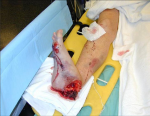
Lower Extremity Trauma
[Click on Image to Enlarge]
The “Medical Executive-Post” is about connecting doctors, health care executives and modern consulting advisors. It’s about free-enterprise, business, practice, policy, personal financial planning and wealth building capitalism. We have an attitude that’s independent, outspoken, intelligent and so Next-Gen; often edgy, usually controversial. And, our consultants “got fly”, just like U. Read it! Write it! Post it! “Medical Executive-Post”. Call or email us for your FREE advertising and sales consultation TODAY [678.779.8597] Email: MarcinkoAdvisors@outlook.com



ePodiatryConsentForms.com
Suite #5901 Wilbanks Drive, Norcross, Georgia, 30092 USA [1.678.779.8597]. Our location is real and we are now virtually enabled to assist new long distance clients and out-of-town colleagues.
If you want the opportunity to work with leading health care industry insiders, innovators and watchers, the “ME-P” may be right for you? We are unbiased and operate at the nexus of theoretical and applied R&D. Collaborate with us and you’ll put your brand in front of a smart & tightly focused demographic; one at the forefront of our emerging healthcare free marketplace of informed and professional “movers and shakers.” Our Ad Rate Card is available upon request [678-779-8597].

“Providing Management, Financial and Business Solutions for Modernity”
Whether you’re a mature CXO, physician or start-up entrepreneur in need of management, financial, HR or business planning information on free markets and competition, the "Medical Executive-Post” is the online place to meet for Capitalism 2.0 collaboration.

Support our online development, and advance our onground research initiatives in free market economics, as we seek to showcase the brightest Next-Gen minds.
THE ME-P DISCLAIMER: Posts, comments and opinions do not necessarily represent iMBA, Inc., but become our property after submission. Copyright © 2006 to-date. iMBA, Inc allows colleges, universities, medical and financial professionals and related clinics, hospitals and non-profit healthcare organizations to distribute our proprietary essays, photos, videos, audios and other documents; etc. However, please review copyright and usage information for each individual asset before submission to us, and/or placement on your publication or web site. Attestation references, citations and/or back-links are required. All other assets are property of the individual copyright holder.





 The Leading Business Education Network for Doctors, Financial Advisors and Health Industry Consultants
Health Insurance Exchange Changes Expected for Enrollment Year 2015
The first three installments of this four-part series on Health Insurance Exchanges explored issues pertinent to beneficiaries and insurers in light of the opening of the Federal Health Insurance Marketplace, as well as other health insurance options, such as Consumer Operated and Oriented Plans (CO-OPs) and Employer Insurance Plans.
Click to access EXCHANGES.pdf
This fourth and final installment discusses the expected changes for the Health Insurance Exchanges in enrollment year 2015, as well as the issues pertinent to consumers as the November 2014 commencement of the open enrollment period approaches.
via: Ann Miller RN MHA
http://www.HealthCapital.com
LikeLike
13.4% (42 million) had no health insurance coverage for all of 2013
According to a report from the United States Census Bureau:
• 86.6% of people had health insurance for all or part of last year. (2013)
• 64.2% of individuals were covered by private health insurance. (2013)
• 53.9% were covered by employment-based health insurance. (2013)
• 34.3% of the population was covered by government health insurance. (2013)
• 17.3% of people were covered by Medicaid last year. (2013)
• 15.6% of people were covered by Medicare last year. (2013)
• 7.6% of children (under age 19) were uninsured. (2013)
Note: This report presents data on health insurance coverage in the United States based on information collected in the 2014 Current Population Survey Annual Social and Economic Supplement (CPS ASEC) conducted by the U.S. Census Bureau.
Source: United States Census Bureau
LikeLike
HHS: Preliminary Improvements To The 2015 Insurance Marketplace
1. In the 44 states for which we have data, 77 issuers will offer new coverage in 2015
2. The Federal Marketplace states alone will have 57 more issuers in 2015; a 30 percent net increase over this year
3. The eight State-based Marketplaces where data is already available will have a total of six more issuers in 2015, a ten percent net increase over this year
4. Four of the 36 states in the Federal Marketplace will have at least double the number of issuers they had in 2014
5. In total, 36 states of the 44 will have at least one new issuer next year
Source: The Department of Health and Human Services
LikeLike
Kaiser: Percentage of covered workers in partially or self-funded plans
As cited in the December 2014 issue of Employee Benefit News, the percentage of covered workers in partially or completely self-funded plans, by firm size are listed below:
• 2010: Small firms – 16%, Large firms – 83%
• 2011: Small firms – 13%, Large firms – 82%
• 2012: Small firms – 15%, Large firms – 81%
• 2013: Small firms – 16%, Large firms – 83%
• 2014: Small firms – 15%, Large firms – 81%
Note: Small firms consist of 3-199 workers while Large firms consist of 200+ workers.
Source: Kaiser Family Foundation/HRET Survey of Employer-Sponsored Health Benefits, 2014
LikeLike