ME-P SYNDICATIONS:
WSJ.com,
CNN.com,
Forbes.com,
WashingtonPost.com,
BusinessWeek.com,
USNews.com, Reuters.com,
TimeWarnerCable.com,
e-How.com,
News Alloy.com,
and Congress.org


BOARD CERTIFICATION EXAM STUDY GUIDES
Lower Extremity Trauma
[Click on Image to Enlarge]
The “Medical Executive-Post” is about connecting doctors, health care executives and modern consulting advisors. It’s about free-enterprise, business, practice, policy, personal financial planning and wealth building capitalism. We have an attitude that’s independent, outspoken, intelligent and so Next-Gen; often edgy, usually controversial. And, our consultants “got fly”, just like U. Read it! Write it! Post it! “Medical Executive-Post”. Call or email us for your FREE advertising and sales consultation TODAY [678.779.8597] E-mail: MarcinkoAdvisors1738@outlook.com



ePodiatryConsentForms.com
Suite #5901 Wilbanks Drive, Norcross, Georgia, 30092 USA [1.678.779.8597]. Our location is real and we are now virtually enabled to assist new long distance clients and out-of-town colleagues.
If you want the opportunity to work with leading health care industry insiders, innovators and watchers, the “ME-P” may be right for you? We are unbiased and operate at the nexus of theoretical and applied R&D. Collaborate with us and you’ll put your brand in front of a smart & tightly focused demographic; one at the forefront of our emerging healthcare free marketplace of informed and professional “movers and shakers.” Our Ad Rate Card is available upon request [678-779-8597].

“Providing Management, Financial and Business Solutions for Modernity”
Whether you’re a mature CXO, physician or start-up entrepreneur in need of management, financial, HR or business planning information on free markets and competition, the "Medical Executive-Post” is the online place to meet for Capitalism 2.0 collaboration.

Support our online development, and advance our onground research initiatives in free market economics, as we seek to showcase the brightest Next-Gen minds.
THE ME-P DISCLAIMER: Posts, comments and opinions do not necessarily represent iMBA, Inc., but become our property after submission. Copyright © 2006 to-date. iMBA, Inc allows colleges, universities, medical and financial professionals and related clinics, hospitals and non-profit healthcare organizations to distribute our proprietary essays, photos, videos, audios and other documents; etc. However, please review copyright and usage information for each individual asset before submission to us, and/or placement on your publication or web site. Attestation references, citations and/or back-links are required. All other assets are property of the individual copyright holder.







 The Leading Business Education Network for Doctors, Financial Advisors and Health Industry Consultants
The Blame Game
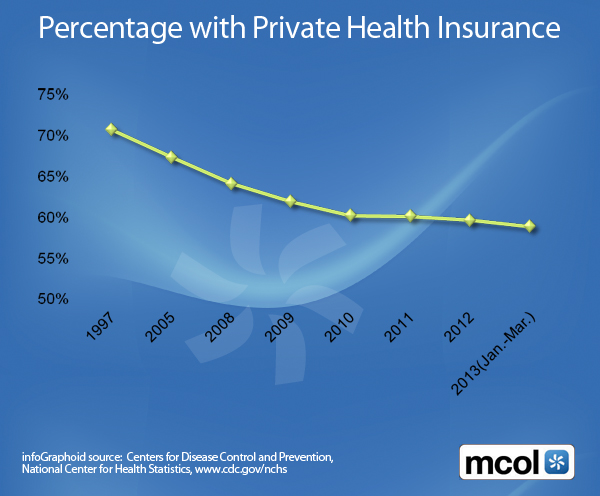
Who is it to blame for the declining private health insurance rate?
Can we blame health insurance exchange of the ACA? Will the private health insurance be extinct in the future? And, why are many employers are planning to drop employer-based health coverage for their employees and some even provide incentive for their employees to get policies through health insurance exchange?
Well, has anyone noticed the stock prices of those health insurance companies that helped to write the Obamacare are doing quite well since the Obamacare was signed into law ”
http://www.infowars.com/insurance-giants-that-wrote-and-lobbied-for-health-law-cash-in/ “.
The US health care insurance business is definitely here to stay and continue to strive, and the only down side is the quality of health care to the American people.
Ken Yeung MBA
Certified Medical Planner™candidate
LikeLike
Reasons for Americans Not Enrolling in a Health Insurance Plan or Medicaid in October When Visiting The Health Insurance Marketplace
* Not certain you can afford plan 48%
* Still trying to decide which plan you want 46%
* Thought the deductibles/copayments were too high 42%
* Website was experiencing technical difficulties 37%
* Not been able to find out financial assistance or Medicaid 29%
* Not eligible for financial assistance or Medicaid 28%
* Couldn’t find a plan with the doctors you wanted 21%
* Some other reason 17%
Source: The Commonwealth Fund
LikeLike
Why Health Insurance Cancellations Shouldn’t Be a Surprise
A former federal health official says consumers in the individual health-care market deserved more of a heads-up about what was coming under Obamacare.
http://www.propublica.org/article/why-health-insurance-cancellations-shouldnt-be-a-surprise?utm_source=et&utm_medium=email&utm_campaign=dailynewsletter
Hope R. Hetico RN MHA CMP™
http://www.CertifiedMedicalPlanner.org
LikeLike
Health Care Delays Squeeze Patients in State High-Risk Pools
Many state and federal insurance pools covering patients with pre-existing conditions are set to close December 31st.
http://www.propublica.org/article/health-care-delays-squeeze-patients-in-state-high-risk-pools?utm_source=et&utm_medium=email&utm_campaign=dailynewsletter
But, it’s an open question whether patients will be able to find policies on Healthcare.gov in time.
Hope R. Hetico RN MHA CMP™
LikeLike
Employer-Sponsored Health Insurance Coverage Trends
According to the Economic Policy Institute, after falling every year since 2000, the share of non-elderly Americans with employer-sponsored health insurance coverage (ESI) essentially held steady between 2011 and 2012, increasing slightly to 58.4 percent. The labor market’s slow improvement over the past two years ended the long-standing downward trend in employer-sponsored health coverage, with ESI increasing slightly by 0.1 percentage points in 2012. However, this comes on the heels of eleven years of erosion. 13.7 million fewer non-elderly Americans had insurance through their employers than in 2000, and as many as 29 million more people under age 65 would have had ESI in 2012 if the coverage rate had remained at its 2000 level.
Massachusetts had the highest rate of ESI coverage among the under-65 population, at 70.8 percent in 2011/2012. It is followed by New Hampshire (70.0 percent), Connecticut (69.7 percent), Minnesota (69.0 percent), North Dakota (67.6 percent), Maryland (67.3 percent), and Utah (66.3 percent). In contrast, less than half of New Mexico’s non-elderly population had ESI, at 47.2 percent.
Source: Economic Policy Institute
http://www.epi.org/press/public-insurance-health-reform-provisions/
LikeLike
Americans With Employer-Based Health Insurance Are Paying More
About half (47%) of Americans with employer-based health insurance say more money is being taken out of their paychecks each month for health insurance than a year ago
Source: Bankrate, Inc
LikeLike
Private Healthcare
Why health insurance companies are doomed?
http://www.msn.com/en-us/money/companies/why-health-insurance-companies-are-doomed/ar-BBaap4I
Clayton
LikeLike