ME-P SYNDICATIONS:
WSJ.com,
CNN.com,
Forbes.com,
WashingtonPost.com,
BusinessWeek.com,
USNews.com, Reuters.com,
TimeWarnerCable.com,
e-How.com,
News Alloy.com,
and Congress.org


BOARD CERTIFICATION EXAM STUDY GUIDES
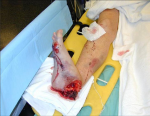
Lower Extremity Trauma
[Click on Image to Enlarge]
The “Medical Executive-Post” is about connecting doctors, health care executives and modern consulting advisors. It’s about free-enterprise, business, practice, policy, personal financial planning and wealth building capitalism. We have an attitude that’s independent, outspoken, intelligent and so Next-Gen; often edgy, usually controversial. And, our consultants “got fly”, just like U. Read it! Write it! Post it! “Medical Executive-Post”. Call or email us for your FREE advertising and sales consultation TODAY [678.779.8597] Email: MarcinkoAdvisors@outlook.com



ePodiatryConsentForms.com
Suite #5901 Wilbanks Drive, Norcross, Georgia, 30092 USA [1.678.779.8597]. Our location is real and we are now virtually enabled to assist new long distance clients and out-of-town colleagues.
If you want the opportunity to work with leading health care industry insiders, innovators and watchers, the “ME-P” may be right for you? We are unbiased and operate at the nexus of theoretical and applied R&D. Collaborate with us and you’ll put your brand in front of a smart & tightly focused demographic; one at the forefront of our emerging healthcare free marketplace of informed and professional “movers and shakers.” Our Ad Rate Card is available upon request [678-779-8597].

“Providing Management, Financial and Business Solutions for Modernity”
Whether you’re a mature CXO, physician or start-up entrepreneur in need of management, financial, HR or business planning information on free markets and competition, the "Medical Executive-Post” is the online place to meet for Capitalism 2.0 collaboration.

Support our online development, and advance our onground research initiatives in free market economics, as we seek to showcase the brightest Next-Gen minds.
THE ME-P DISCLAIMER: Posts, comments and opinions do not necessarily represent iMBA, Inc., but become our property after submission. Copyright © 2006 to-date. iMBA, Inc allows colleges, universities, medical and financial professionals and related clinics, hospitals and non-profit healthcare organizations to distribute our proprietary essays, photos, videos, audios and other documents; etc. However, please review copyright and usage information for each individual asset before submission to us, and/or placement on your publication or web site. Attestation references, citations and/or back-links are required. All other assets are property of the individual copyright holder.





 The Leading Business Education Network for Doctors, Financial Advisors and Health Industry Consultants
A: Economic-Profiling Explained
Economic-Profiling is a [not so new] type of medical practice pattern profiling that emphasizes the economic and financial impact of medical practice variations. It is something akin to the six-sigma medical process improvement, but clinical variations in this case translate to dollars, rather than lives lost, or mistake made; but of course cycle back to clinical care quality.
Usually a cost data -field is used as the measure of interest, and variation from the norm is often determined through severity adjusted case-mix indices. Costs may also be broken down into service categories, such as lab, surgical, radiology, other professional, facility, drug, and other cost categories. Again, each of these service categories should also be case-mix adjusted so that a performance index and/or cost variance can be provided for each one.
Areas that can be profiled in economic and resource utilization profiling include the following:
• Consulting, specialty, and sub-specialty referral practices.
• Prescription habits, including sample dispensation and using generic equivalents, especially for chronic conditions such as hypertension and Type II diabetes.
• Use of invasive and interventional tests such as angiograms, IVPs, bone scans, and certain biopsies.
• Use of non-invasive procedures and tests such as CT and MRI scans, cardiovascular stress tests, chest X-rays, and ultrasounds.
• Average length of hospital stay (ALOS), surgical operating times, use of assistant surgeons, and other utilization parameters.
If a provider receives a report that points to significant practice variation, the question comes up as to what factor(s) caused the variation. This is where the capability of “drill-down” analysis becomes important.
In this method, an area of variation is pinpointed and reports are brought up in greater detail specifically concerning that area of variation.
For example, if a physician shows a high cost variance for migraine headache, a drill-down analysis into the disease state may show that the provider uses CT and MRI scans of the head significantly more frequently than his/her peers. The provider can then be educated about the need for fewer scans, only reserving them for cases having a high index of suspicion for a tumor.
The importance of balancing economic or cost-based profiling with quality of care profiling must be stressed. Managed care has been purported in many areas of the media to be concerned primarily with profits and costs of care to the detriment of quality. Such instances include reports of overly short maternity lengths of stay, difficulty obtaining access to care, and rushed physician visits.
Health plans, and the CMS, are increasingly the extent to which doctors and hospital include various quality measures in their practice pattern profile reports in an effort to show the community that they desire to maintain quality while keeping costs down.
Hopefully this trend will continue as we trust this information is helpful to you.
Dr. Brent A. Metfessel; MD, MS
Former Anthem Blue Cross/Shield
Corporate Clinical Research Coordinator
More info: http://www.springerpub.com/prod.aspx?prod_id=23759
Institutional: http://www.HealthcareFinancials.com
Terms: http://www.HealthDictionarySeries.com
LikeLike